733 results for: Labor and Labor Unions
Photograph
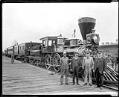
Great Northern William Crooks Special train at King Street station, Seattle, May 27, 1924
The first locomotive on what later became the Great Northern Railway was the William Crooks, named for the line's first chief engineer. As publicity for the opening of Oriental Limited service to Chicago, the historic William Crooks train visited Seattle's King Street station. The public enjoyed viewing the ancient relic, and comparing it with the modern Oriental Limited train. The…
ID Number:1983.10.989.2
Date:1924
Photograph
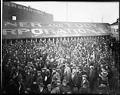
General strike participants leaving shipyards, Seattle, February 1919
The Seattle General Strike was a work stoppage by more than 65,000 workers in Seattle from February 6-11, 1919. The strike began in shipyards when workers were refused pay increases after two years of World War I wage controls. Most of the city's 110 local unions, including members of the American Federation of Labor (AFL) and the Industrial Workers of…
ID Number:1983.10.1347.3
Date:1919
Photograph
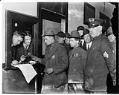
Seattle General Strike deputies receiving weapons, February 6, 1919
In 1919, Seattle shipyard workers went on strike for higher wages. Other labor unions stopped work too, thus starting the nation's first general strike. Many people feared the strike would lead to violence. Seattle's mayor and chief of police deputized groups of soldiers and sailors to help keep the peace. Most of the strikers stayed home, however, and the city…
ID Number:1983.10.1348
Date:1919
Photograph
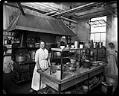
Women in working in kitchen at Frederick & Nelson, Seattle, circa 1920
The first Frederick & Nelson retail store opened in 1889, right after Seattle's great fire. By 1916, the company was doing so well that it built a large new store at Fifth Avenue and Pike Street, which many people thought was too far out of town. Frederick & Nelson was one of Seattle's landmark companies for over a century. It…
ID Number:1983.10.1407.5
Date:Circa 1920
Photograph
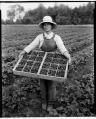
Asian American strawberry picker, circa 1919
Many Asian immigrants in the Seattle and King County area were farmers. Before World War One, Japanese farmers were already supplying most of the region's population with vegetables, small fruits, and diary products. Starting in the 1920s, many immigrants from the Philippines worked as seasonal laborers at area farms.In this photo, taken in the Seattle area around 1919, an Asian-American…
ID Number:1983.10.1593.1
Date:Circa 1919
Photograph
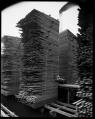
Stacks of lumber drying at the Seattle Cedar Lumber Manufacturing Company's mill in Ballard, circa 1919
The Seattle Cedar Mill, located just west of the Ballard Bridge, was the largest in Ballard. At the mill, logs were cut into lumber which was then dried for at least nine months before being sold. The stacks of drying lumber were over 50 feet high. In 1958, these stacks caught fire and burned. Ballard residents remembered the huge blaze…
ID Number:1983.10.1692.2
Date:Circa 1919
Photograph
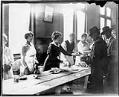
Serving food to striking workers, February 1919
During the 1919 Seattle General Strike, various individuals and groups supported the strikers' cause by setting up soup kitchens to feed workers and their families. In this photo, a woman serves a plate of food to a striking worker. Webster & Stevens number: 67482
ID Number:1983.10.1735
Date:1919
Photograph
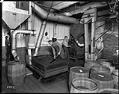
Men working at Manning's coffee roasting plant, Seattle, circa 1920
Manning's Coffee Cafes were very popular with Seattle residents. The company had its own bakery and coffee roasting plant. Handwritten on sleeve: Manning Coffee House Ints.Webster & Stevens number: 81817
ID Number:1983.10.1784.4
Date:Circa 1920
Photograph
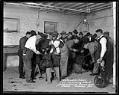
Military veterans learning automobile mechanics, January 1920
After the veterans of World War I returned home in 1918, many had trouble finding work. The Knights of Columbus, a Roman Catholic benefit organization, sponsored a free evening school to help them learn job skills. In this photo, World War I veterans are learning auto mechanics. At least one member of the group is an African-American. Webster & Stevens…
ID Number:1983.10.1791.8
Date:1920
Photograph
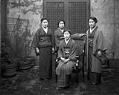
Japanese silk weavers, circa 1920
During the 1920s, millions of dollars of Japanese raw silk came through the port of Seattle on the way to mills in the eastern United States. From time to time, groups of Japanese businessmen and other Japanese citizens visited the city to promote the silk trade. In this photo, taken around 1920, four Japanese silk weavers in kimonos pose for…
ID Number:1983.10.1970.3
Date:Circa 1920