365 results for: Discrimination
Photograph
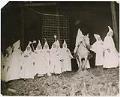
Klansmen at initiation ceremony at Wilson Station, Renton, July 14, 1923
A resurgence of Ku Klux Klan (KKK) movement between 1915 and the mid-1920s, in what historians call the "Second Klan," reached all 48 states, with membership over four million in the mid-1920s. Although the Klan's core belief in white supremacy, at least with regard to African Americans, had less resonance in Washington State, by 1921 there was a ready audience…
ID Number:2000.107.108.16.05
Date:1923
Photograph
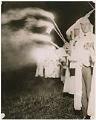
Klansmen at initiation ceremony at Wilson Station, Renton, July 14, 1923
A resurgence of Ku Klux Klan (KKK) movement between 1915 and the mid-1920s, in what historians call the "Second Klan," reached all 48 states, with membership over four million in the mid-1920s. Although the Klan's core belief in white supremacy, at least with regard to African Americans, had less resonance in Washington State, by 1921 there was a ready audience…
ID Number:2000.107.108.16.06
Date:1923
Photograph
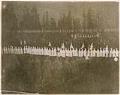
Klansmen at initiation ceremony at Wilson Station, Renton, July 14, 1923
A resurgence of Ku Klux Klan (KKK) movement between 1915 and the mid-1920s, in what historians call the "Second Klan," reached all 48 states, with membership over four million in the mid-1920s. Although the Klan's core belief in white supremacy, at least with regard to African Americans, had less resonance in Washington State, by 1921 there was a ready audience…
ID Number:2000.107.108.16.07
Date:1923
Photograph
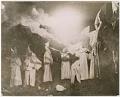
Klansmen at initiation ceremony at Wilson Station, Renton, July 14, 1923
A resurgence of Ku Klux Klan (KKK) movement between 1915 and the mid-1920s, in what historians call the "Second Klan," reached all 48 states, with membership over four million in the mid-1920s. Although the Klan's core belief in white supremacy, at least with regard to African Americans, had less resonance in Washington State, by 1921 there was a ready audience…
ID Number:2000.107.108.16.08
Date:1923
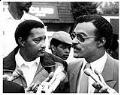
Photograph
Jim Mason and Eddie Rye, Jr. talking to press, Spetember 15, 1986
On September 15, 1986, about two dozen African American contractors and unemployed workers visited the Guy F. Atkinson Co. job site near the Mount Baker tunnel to express their dissatisfaction with minority hiring and contracting procedures used by the firm. Eddie Rye Jr., a representative of the Black Contractors Coalition, told Atkinson representative Ira Fell that the group was particularly…
ID Number:2000.107.119.28.01
Date:1986
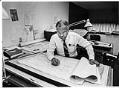
Photograph
Benjamin McAdoo working in his architectural offices, Seattle, 1981
Benjamin McAdoo (1920-1981) was the first Black architect to be licensed and establish a practice in Washington state. Born in Pasadena, McAdoo studied architecture at the University of Southern California before transferring to the University of Washington (UW) in Seattle. Graduating in 1946, he was the first Black person to receive an architecture degree from UW. McAdoo launched his new…
ID Number:2000.107.120.27.01
Date:1981
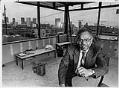
Photograph
Benjamin McAdoo in his living room, Seattle, 1981
Benjamin McAdoo (1920-1981) was the first Black architect to be licensed and establish a practice in Washington state. Born in Pasadena, McAdoo studied architecture at the University of Southern California before transferring to the University of Washington (UW) in Seattle. Graduating in 1946, he was the first Black person to receive an architecture degree from UW. McAdoo launched his new…
ID Number:2000.107.120.27.02
Date:1981
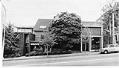
Photograph
Benjamin McAdoo's mixed-use home and office building, Seattle, May 1981
Benjamin McAdoo (1920-1981) was the first Black architect to be licensed and establish a practice in Washington state. Born in Pasadena, McAdoo studied architecture at the University of Southern California before transferring to the University of Washington (UW) in Seattle. Graduating in 1946, he was the first Black person to receive an architecture degree from UW. McAdoo launched his new…
ID Number:2000.107.120.27.03
Date:1981
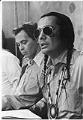
Photograph
Russell Means and Hank Adams at press conference, Seattle, October 6, 1972
In 1972, American Indian Movement (AIM) activists Dennis Banks (1937-2017), Ojibwe, and Russell Charles Means (1939-2012), Oglala Sioux, along with members of the Rosebud Sioux, organized the Trail of Broken Treaties and Pan American Native Quest for Justice, a caravan of automobiles that would cross the nation in a political protest concluding at the White House. On October 6th, three…
ID Number:2000.107.123.30.01
Date:1970
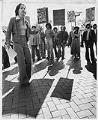
Photograph
Chicano demonstration at Seattle Central Community College, October 12, 1976
On October 12, 1976, a group of Chicano students at Seattle Central Community College protested the college's failure to provide bilingual programs or counseling, citing that as the cause for the drop in Chicano enrollment. The students demanded the hiring of a full-time bilingual Chicano counselor, more Chicano administrators, faculty and staff, and a recruitment program to attract more Chicano…
ID Number:2000.107.124.39.12
Date:1976