15 results for: Seattle Daily Call, The
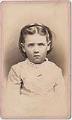
Photograph
Portrait of Winona Bailey as a child, 1879
Helen Winona Bailey (1873-1938) was born in Maine to Charles Harris Bailey (1849-1920) and Mary H. (Wilder) Bailey (1849-1897). The family moved to Colorado about 1890, then to Seattle around 1905. She was a Latin teacher in the Everett High School from about 1906-1912, and later head of the Language Department at Queen Anne High School. Winona was an avid…
ID Number:1978.6688.2.1
Date:1879
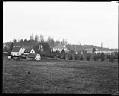
Photograph
Dykeman farm on Lake Burien, circa 1925
While the first settlers arrived in the Burien area in the 1870s and 1880s, it remained quite sparsely populated well into the 20th century. This photo, taken around 1925, is believed to show "Holly Hedge" on the northeast corner of Lake Burien. The road running through the center of the photo is SW 152nd, and the buildings on the left…
ID Number:1983.10.3062.8
Date:Circa 1925
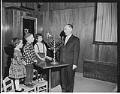
Photograph
Children watching rabbi light menorah candle, December 3, 1961
Hanukkah (or Chanukah) is the Jewish winter celebration known as the "festival of lights," marked by the nightly lighting of the menorah, prayers, and special foods. In this photo, three children stand on chairs to get a good view of Rabbi Abba Abrams lighting the far right candle on a menorah for the first night of Hanukkah in December 1961.…
ID Number:1986.5.4597.1
Date:1961
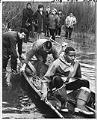
Photograph
Dick Gregory on Nisqually River, March 1, 1966
Richard Claxton "Dick" Gregory (1932-2017) was an American comedian and civil rights activist who helped call attention to Washington State laws restricting Native American rights. The "fish wars" as they were known at the time, led to the Boldt Decision, a federal ruling guaranteeing Washington tribes half the state's salmon and steelhead trout catch.In this image Dick Gregory, foreground, sits…
ID Number:2000.107.095.30.02
Date:1966
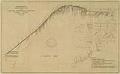
Cartographic material
City of Seattle Harbor Department Map of Central Waterfront District, August 1916
Maritime trade was crucial to the city's economic development, and Seattle continues to be defined and supported by the harbor that has become one of the busiest ports in the U. S. This 1916 map of Elliott Bay depicts wharves and businesses along the waterfront, as well as and water depths (soundings) along piers and in Elliott Bay. Each street,…
ID Number:2019.3.17
Date:1916
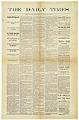
Serial
The Daily Times, Seattle, June 10, 1889
The Great Seattle Fire of June 6, 1889, was a significant turning point in the city's history and changed both the physical and political landscapes. The fire was accidentally started in a paint and woodwork shop at Madison Street and Front Street (now First Avenue) at 2:30 p.m., and over the course of the next 18 hours, swept a southward…
ID Number:2019.3.72
Date:1889
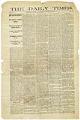
Serial
The Daily Times, Seattle, June 12, 1889
The Great Seattle Fire of June 6, 1889, was a significant turning point in the city's history and changed both the physical and political landscapes. The fire was accidentally started in a paint and woodwork shop at Madison Street and Front Street (now First Avenue) at 2:30 p.m., and over the course of the next 18 hours, swept a southward…
ID Number:2019.3.73
Date:1889
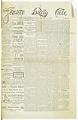
Scrapbook
"Chinese Crisis," Seattle Daily Call, February 8, 1886
Seattle's earliest Chinese residents are believed to have arrived in the early 1860s, and while welcomed at first for the role they played in the region's development, Chinese immigrants were not allowed to vote and were subjected to numerous laws that restricted their rights. In the mid-1870s and early 1880s the national economy took a downturn, increasingly leading white workers…
ID Number:2022.3.3.2.1
Date:1886
Scrapbook
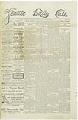
"More Quiet," Seattle Daily Call, February 9, 1886
Seattle's earliest Chinese residents are believed to have arrived in the early 1860s, and while welcomed at first for the role they played in the region's development, Chinese immigrants were not allowed to vote and were subjected to numerous laws that restricted their rights. In the mid-1870s and early 1880s the national economy took a downturn, increasingly leading white workers…
ID Number:2022.3.3.2b.1
Date:1886
Scrapbook
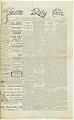
"Martial Law,"Seattle Daily Call, February 10, 1886
Seattle's earliest Chinese residents are believed to have arrived in the early 1860s, and while welcomed at first for the role they played in the region's development, Chinese immigrants were not allowed to vote and were subjected to numerous laws that restricted their rights. In the mid-1870s and early 1880s the national economy took a downturn, increasingly leading white workers…
ID Number:2022.3.3.3.1
Date:1886