9 results for: Puget Sound War, 1855-1856
Document
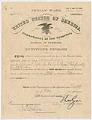
Survivor's Pension Certificate issued to Carson D. Boren, May 20, 1903
Carson Dobbins Boren (1824-1912) arrived in Seattle in 1851 as part of the group of White settlers known as the Denny party. He built a cabin at what is now the corner of Second and Cherry in downtown Seattle. Mr. Boren served as King County's first sheriff and also helped explore wagon routes over the Cascades. He preferred a solitary…
ID Number:1952.986.56
Date:1903
Photograph
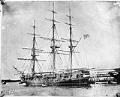
U.S.S. Decatur, circa 1850
During the early 1850s, hostility grew between the Native peoples and the new settlers in the Puget Sound region. The "Decatur" and several other government ships were moved to the area to protect the settlers. On January 26, 1856, following word of a planned attack on Seattle, troops on the "Decatur" fired howitzers into the forest beyond Third Avenue where…
ID Number:1983.10.6182
Date:Circa 1850
Photograph
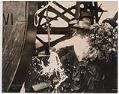
Kate Borst christening the steamer "Snoqualmie," August 11, 1919
In August 1919, the Puget Sound Bridge & Dredging Company launched the steamer "Snoqualmie" at its Seattle shipyard on Harbor Island. The vessel was named for the Snoqualmie Tribe, in honor of the aid they gave the settlers against other Indigenous groups in the war of 1855-1856, now referred to as the Puget Sound War. Many tribal members traveled to…
ID Number:1995.37.19.2.54
Date:1919
Photograph
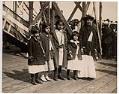
Snoqualmie woman and girls at the launching of the steamer "Snoqualmie," 1919
On August 11, 1919, the Puget Sound Bridge & Dredging Company launched the steamer "Snoqualmie" at its Seattle shipyard on Harbor Island. The vessel was named for the Snoqualmie Tribe, in honor of the aid they gave the settlers against other Indigenous groups in the war of 1855-1856, now referred to as the Puget Sound War. This photo shows some…
ID Number:1995.37.19.2.62
Date:1919
Photograph
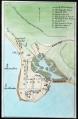
Plan of city during Battle of Seattle, 1856
During the early 1850s, hostility grew between the Native Peoples and the European American settlers in the Puget Sound region. The "Decatur" and several other government ships were moved to the area to protect the settlers. On January 26, 1856, following word of a planned attack on Seattle, troops on the "Decatur" fired howitzers into the forest beyond Third Avenue…
ID Number:2002.3.549
Date:1856
Cartographic material
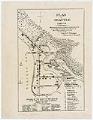
Plan of Seattle in 1855-6, revised 1930
On the morning of January 26, 1856, the "Battle of Seattle" began when Native Americans raided the white settlement in what is now known as Seattle. Previously warned of the attack, most settlers had barricaded themselves in a blockhouse. The attackers were driven off by artillery fire. The battle was the penultimate event in a series of armed conflicts, known…
ID Number:2018.3.8.4
Date:1930
Manuscript
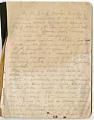
Henry A. Smith's recollection of 1856 "Battle of Seattle," circa 1900
On the morning of January 26, 1856, the "Battle of Seattle" began when Native Americans raided the settlement of Seattle. Previously warned of the attack, most settlers had barricaded themselves in a blockhouse. The attackers were driven off by artillery fire and by Marines from the U.S. Navy sloop-of-war Decatur, anchored in Elliott Bay. Although there were relatively few casualties…
ID Number:MS.COLL.204
Date:Circa 1900
Photograph
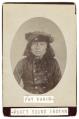
Pat Kanim, Snoqualmie Chief, circa 1855
The Snoqualmie people are a Coast Salish group who have lived in the Snoqualmie River Valley since time immemorial. They made dugout canoes which they used to navigate the river and reach Puget Sound. Traditionally the Snoqualmie burned off the bottom lands of the Snoqualmie Valley to create open areas that ensured an abundance of edible plants for foraging as…
ID Number:SHS1679
Date:Circa 1855
Photograph
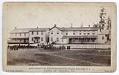
Industrial Boarding School buildings on the Puyallup Reservation, circa 1885
The Puyallup people are a Coast Salish group whose historic lands are along the Puyallup River Valley. They call themselves “Spuyalepabs” in their native language of Lushootseed, meaning “people from the bend at the bottom of the river.” Before settlers arrived, the Puyallup lived in villages that spread from the Cascade foothills to the shores of Puget Sound. In 1854,…
ID Number:SHS3491
Date:Circa 1885