9 results for: LaRoche, Frank
Photograph
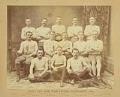
Queen City Hose Team members posing for tournament, 1889
The creation of the Seattle Fire Department (SFD) can be traced back to July 6th, 1876, when the all-volunteer Seattle Engine Company No.1 was organized. In 1883, the City Charter was amended to create and fund equipment, but not staff, for a centralized municipal fire department. The volunteer-based system persisted until pressure from the insurance industry and citizens after the…
ID Number:1965.3520.9
Date:1889
Photograph
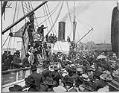
Departure of the steamer "Mexico" for the Klondike, 1897
On July 17, 1897, the steamer "Portland" arrived in Seattle with a large amount of gold from the Klondike. This set off a stampede of people wanting to go north to the gold fields. The steamer "Mexico" left Seattle on July 25th loaded with people and supplies. This was the ship's last voyage. It was wrecked in Alaskan waters on…
ID Number:1983.10.6057
Date:1900
Photograph
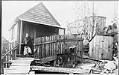
Kikisoblu (Princess Angeline) at her house, circa 1893
Kikisoblu was the eldest daughter of Chief Si'ahl (Chief Seattle). By the time this photo was taken, probably in the 1890s, her Suquamish and Duwamish people had been exiled to the Port Madison Reservation. White settlers renamed her Princess or Queen Angeline and built her a new home. Her house was located on Western Avenue near what is now Pike…
ID Number:1983.10.6086
Date:Circa 1893
Photograph
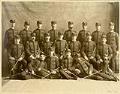
Ancient Order of United Workmen Drill Team No. 1, Seattle, 1902
The Ancient Order of United Workmen, founded in 1868, was a labor-associated fraternal organization that provided mutual insurance policies for its members. The AOUW in Seattle created a drill team in 1902, which in 1903 won the Lawrence L. Moore Trophy for the best drill team at the July 4 parade. This photograph shows nineteen members of the team posed…
ID Number:1990.86.1
Date:1902
Photograph
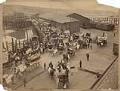
July 4th parade at the waterfront, Seattle, July 4, 1891
Just over two years after Seattle's Great Fire, Seattle's July 4, 1891 parade vehicles gathered at the Northern Pacific Railroad's waterfront warehouses. Local businesses, including a bank and a boot store, sponsored some of the carriages. Newsboys from the Seattle Post-Intelligencer ride in the large flag-draped vehicle to the lower left. Photographer Frank LaRoche's wagon is in the upper center.This…
ID Number:1995.39.1
Date:1891
Photograph
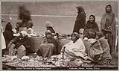
Indigenous women merchants at Treadwell Mines on Douglas Island, Alaska, July 1897
The Tlingit people have lived on the coast and islands of what is now southeastern Alaska since time immemorial. Tlingit society is organized into clans, which follow maternal descent. Fishing, gathering, and hunting were central to historic Tlingit lifeways – they used salmon, shellfish, seals, berries, deer, and other food sources. They used every part for different purposes, not wasting…
ID Number:SHS9
Date:1897
Photograph
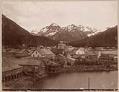
Sitka, Alaska, June 1897
Some of the shipping companies which carried gold seekers to Skagway and Dyea had already been carrying visitors to Sitka and other southeastern Alaskan ports. Sitka was settled by Russians in 1802 and was the center of their American fur trade. The city overlooks a sheltered harbor on the west shore of Baranof Island, nearly 1,000 miles northwest of Seattle.This…
ID Number:SHS29
Date:1897
Photograph
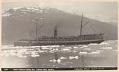
Steamer "Queen" and ice floes at Taku Inlet, 1897
Steamers carrying gold seekers north from Seattle during icy weather didn't always have an easy time of it. Alaska's Inland Passage could be tricky and dangerous, and channels weren't always marked.In this 1897 photo, the steamer "Queen" is stuck on a sandbar in Taku Inlet, southeast of Juneau. The vessel waited for six hours in the ice before it floated…
ID Number:SHS1512
Date:1897
Photograph
Wako, Indigenous healer, circa 1894
The photographer's caption indicates that this woman, named Wako, was a doctor or healer. Caption on image: "Wako, the Indian doctress"Caption on image: "Photo by Frank LaRoche No. 104"
ID Number:SHS3767
Date:Circa 1894