134 results for: Toys
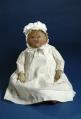
Doll made and painted by Harriet Foster Beecher, 1890
This rag doll named "Galatea" was made by Harriet Foster Beecher and she painted the face as well. It belonged to Guendolen Carkeek Plestcheeff (1892-1994) who was born in Seattle at the First Hill mansion home of her parents, British-born Seattle settlers Morgan and Emily Carkeek. Following in the footsteps of her mother, who founded the Seattle Historical Society, Guendolen…
ID Number:1952.90
Date:1890
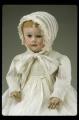
Rag doll, 1888
The face on this rag doll was painted by Harriet Foster Beecher (1853-1918). Beecher arrived in Seattle in 1880 and opened what is thought to be Seattle’s first art studio in 1881. She painted Indigenous life in oils and watercolors, portraits of Seattle pioneers, and landscapes. Beecher played a critical role in expanding the community of artists in Seattle through…
ID Number:1952.92.B
Date:1888
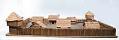
Model of Fort Nisqually, ca. 1910-1930
The artifact donor made this model when he was 11 years old. It represents the Hudson's Bay Company fur trading and farming post located in what is now Dupont, Washington. Nisqually was chosen for its ideal ship anchorage location and, in 1832, the first structure, the Nisqually House, was built, with more buildings added thereafter.
ID Number:1958.1563
Date:Circa 1910-1930
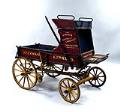
Model of a Heckmann's coal wagon, 1895
Henry Heckmann owned a fuel and transfer business in Seattle from the late 1800s into the 20th century. This model wagon was made by Joseph F. Hardwiger as a gift to Heckmann's children in 1895. Hardwiger made all of Heckmann's full-sized wagons.
ID Number:1960.2051.1
Date:1895
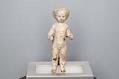
China doll found by Frank H. Davidson during the Seattle Fire of 1889
The Great Fire of June 6, 1889 was a significant turning point in Seattle's history and changed both the physical and political landscapes of the city. The fire started in a paint and woodwork shop at Front and Madison and swept southward across 100 acres of Seattle's business district and waterfront. The inferno completely consumed the business district's wooden buildings,…
ID Number:1960.2128
Date:Circa 1870
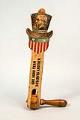
Noisemaker promoting Benjamin Harrison for United States President in 1892
Benjamin Harrison was elected the twenty-third US President in 1888. When Harrison ran for re-election in 1892, he lost to Grover Cleveland. This promotional noisemaker is from the 1892 re-election campaign. One side features Harrison's profile with the slogan, "One good term deserves another," and the other side has his running mate, Whitelaw Reid, and "The Tippecanoe Rattler," referring to…
ID Number:1962.2682.5
Date:1892
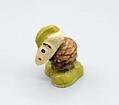
Pelican figurine, 1942
This novelty item, made from a pinecone, appears to be a winking pelican wearing a WWII military cap and boots, possibly representing the United States Naval Services.
ID Number:1963.3033.24
Date:1942
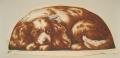
Pattern for making a toy stuffed dog, ca. 1892
Even in the 1890s, a craft project could be abandoned and forgotten. Arnold Print Works in Massachusetts made several versions of these stuffed animal patterns; they just needed to be cut out, sewn together, and stuffed. These unfinished pieces were donated to MOHAI in 1964.
ID Number:1964.3338.10
Date:Circa 1892
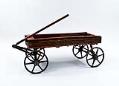
Red Coaster wagon, ca. 1920
As a boy in Iowa, Jay Higbee used this wagon on his paper route for the Des Moines Register. Jay ended up moving to Seattle and, in 1965, his children decorated the wagon for the Seafair parade as a passenger car with the name, ‘Northern Pacific Really Terrific.” It won a prize in the children’s parade in the University District.
ID Number:1966.3837
Date:Circa 1920
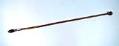
Noisemaker cane, ca. 1911-1941
During the early Seattle Potlatches, many of these canes were used by the celebrants. A tablet the size of an aspirin made of a strong explosive was put in the iron slot at the bottom and when it was thumped on the sidewalk, a very loud explosion occurred. These noisemakers unfortunately burned women's ankles from the flash so they were…
ID Number:1966.3878.63
Date:Circa 1911-1941