38 results for: Klondike-Alaska Gold Rush
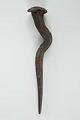
Spike from Imperial Russian Navy sidewheel gunboat, the POLITKOFSKY, ca. 1850s
Built by the Russians in Sitka, the POLITKOFSKY came under United States ownership in 1867 when Russian Alaska was sold to the US. The gunboat was then sold into civilian service as a tugboat, Polly, working the northwest coast of North America until 1896. It was then converted to a schooner barge and carried eager gold seekers to Alaska during…
ID Number:1948.399.3
Date:Circa 1850-1860
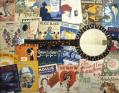
Inlaid frame banjo, 1867
This banjo, made by Henry C. Dobson (1851-1903), was owned by a Seattle druggist and doctor at the turn of the 20th century. Dobson was one of America's most prominent early banjo manufacturers. He patented the closed back banjo in 1867, and is also credited with using frets (in 1878), a resonator, and the first attempted use of a tone…
ID Number:1950.14.b
Date:1867
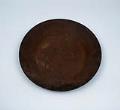
Gold mining pan used during the Klondike Gold Rush, ca. 1897
These pans are said to have been used by Ole Marsh, or the "Terrible Swede" as he was nicknamed, when he worked for Charlie Anderson during the Klondike Gold Rush of 1897. Ole Marsh was also a pseudonym for Joe Carroll, who was a Seattle champion wrestler and wrestling manager at that time.
ID Number:1951.44.M
Date:Circa 1897
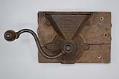
Coffee grinder used by sourdoughs during the Klondike Gold Rush, ca. 1897
The Klondike Gold Rush enticed many hopeful gold miners to Alaska who brought along gear and staples for the journey and grueling work. This versatile tool could be firmly attached to a cabin wall, post, or tree and was used to grind the morning coffee or the barley for brewing miner's beer.
ID Number:1952.161.1
Date:Circa 1897
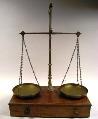
Gold scale, ca. 1895
These large scales were part of an extensive collection of Alaskan memorabilia donated to the museum by Miss Lulu Fairbanks. They are of the type used in a retail or commercial establishment for accurately measuring gold to make a sale. During the Klondike Gold Rush, merchants would weigh the miners’ gold on one side of the scale and balance it…
ID Number:1952.188
Date:Circa 1895
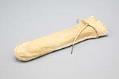
Gold poke used in Alaska, 1902
This poke, or pouch, was used during the gold rush in Alaska to store nuggets until they could be assessed in town.
ID Number:1954.824.c
Date:Circa 1902
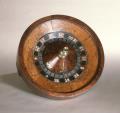
Roulette wheel from Soapy Smith's saloon in Skagway, Alaska, ca. 1890
This roulette wheel once belonged to the infamous con man, Jefferson Randolph “Soapy” Smith, who arrived in Skagway, Alaska, in 1897, during the Klondike Gold Rush. “Soapy” Smith was reputed to have rigged his roulette wheel, marked his cards and ran a Skagway gang, marking him as the “king of the frontier con men”—until a fatal shootout in 1898.
ID Number:1955.970.236
Date:Circa 1890
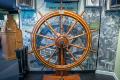
S.S. Portland ship's wheel, 1885
The S.S. Portland, built in 1885, launched the Klondike Gold Rush in 1897. For the next ten years, the steamship carried miners from Seattle to Alaska, and brought back more than a ton of gold. She wrecked in a 1910 blizzard off Alaska. The wheel and other parts of the ship were rescued by crew members before she sank.
ID Number:1955.970.258
Date:1885
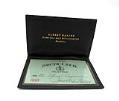
Leather card case for Arctic Club member Dr. Alfred Raymond, 1910
Complimentary gifts bearing business names were once a common form of advertisement. Albert Hansen, a local silversmith and jeweler, most likely made these card holders for the members of the Arctic Club, an exclusive men's social club mostly comprised of those who "struck it rich" during the Klondike Gold Rush of 1897.
ID Number:1958.1516.37
Date:1910
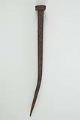
Spike from Imperial Russian Navy sidewheel gunboat, the POLITKOFSKY, ca. 1850s
Built by the Russians in Sitka, the POLITKOFSKY came under United States ownership in 1867 when Russian Alaska was sold to the US. The gunboat was then sold into civilian service as a tugboat, Polly, working the northwest coast of North America until 1896. It was then converted to a schooner barge and carried eager gold seekers to Alaska during…
ID Number:1959.1623.1
Date:Circa 1850