58 results for: Coast Salish Peoples
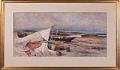
Watercolor painting of "A Camp on the Tide Flats," by Harriet Foster Beecher, 1897
Born in Indiana, Harriet Foster Beecher (1853-1918) traveled to the West Coast to attend the San Francisco School of Design. She moved to Seattle in 1880 and married Captain Herbert Foote Beecher. In 1881, Beecher opened what is thought to be Seattle’s first art studio. She painted Indigenous life in oils and watercolors, portraits of Seattle pioneers, and landscapes. Beecher…
ID Number:1924.709.1
Date:1897
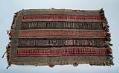
Rug made by "Salmon Bay Charlie," ca. 1900
Hwehlchtid and Chilohleet'sa, known to many as Salmon Bay Charlie, and his wife Madelline, refused to move to the Port Madison Reservation. This mat fragment was from the home they shared at Shilshole, downhill from what is now Discovery Park. The maker twined the mat from factory-made yarn using techniques more commonly associated with cedar bark basketry.
ID Number:1947.437.2
Date:Circa 1900
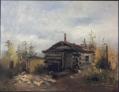
Painting of Kikisoblu's (Princess Angeline) home, 1894
Kikisoblu (Princess Angeline), also known in Lushootseed as Kikisoblu, Kick-is-om-lo, or Wewick, was the eldest daughter of Chief Si'ahl (Chief Seattle). She was born around 1820 and lived until she was in her mid-seventies. The artist, Jessie M. Elliott (1861-1950), was born in Merrimack, Wisconsin, and moved to Seattle in the late 1880s to open an art school. In addition…
ID Number:1947.437.8
Date:1894
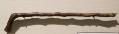
Kikisoblu's (Princess Angeline) cane, ca. 1890
Kikisoblu (Princess Angeline), also known in Lushootseed as Kikisoblu, Kick-is-om-lo, or Wewick, was the eldest daughter of Chief Si'ahl (Chief Seattle). She was born around 1820 and lived until she was in her mid-seventies.She lived in a cabin on the waterfront, earning a living doing laundry and making baskets for sale. She had friends among Seattle’s founding families and Catherine…
ID Number:1949.49
Date:Circa 1890
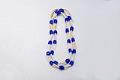
Dentalium and bead necklace, ca. 1860
Strings of beads and dentalium were often used for trade or sale between the Native community and the early European settlers.
ID Number:1951.9.E
Date:Circa 1850-1870
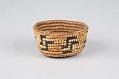
Salish basket, ca. 1920
This basket features a repeated "S" shape imbricated into the weave. The donor, Elwha Krueger, lived in Seattle in the early 20th century and she most likely purchased it from a local Indigenous basketmaker.
ID Number:1952.180.17
Date:Circa 1920
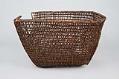
Puget Sound clam basket
The Coast Salish people of the Pacific Northwest designed baskets like this for gathering clams. When a clam is put into the basket, the basket structure holds the clam, but the open structure allows water and sand to fall out. This particular basket has been damaged over time and is not fully intact.
ID Number:1952.237.M.1
Date:19th Century
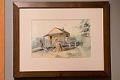
Portrait of Kikisoblu (Princess Angeline) at home, 1892
Watercolor painting by artist C.C. Maring of Kikisoblu (Princess Angeline), daughter of Chief Si'ahl (Chief Seattle), sitting in front of her house at the foot of Pike Street. She lived and worked in Seattle until her death in 1896. Cassius Clay (C.C.) Maring (1863-1905) was a local artist, illustrator, and engraver. The drawing of Washington's portrait for the state seal…
ID Number:1954.686
Date:1892
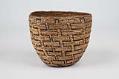
Coast Salish basket, ca. 1900
This Coast Salish basket was donated by Mrs. Rollin Sanford, born Kate McGraw (1876-1971). She was the daughter of Washington governor, John Harte McGraw, who was in office from 1893-1897.
ID Number:1955.869.1
Date:Circa 1900
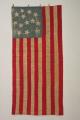
Battle of Seattle "Petticoat Flag," 1856
On the morning of January 26, 1856, the "Battle of Seattle" began when Native Americans raided the white settlement in what is now known as Seattle. Previously warned of the attack, most settlers had barricaded themselves in a blockhouse. Settlers say the women who sought shelter in the blockhouse used strips from their petticoats to sew this flag during the…
ID Number:1955.921.1
Date:1856