37 results for: Agriculture and Farms
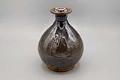
Brown earthenware jar or jug, ca. 1900
This earthenware jar is believed to have once been owned and used by a local Chinese laborer to store liquor. These jars were often found left in agricultural fields in the area.
ID Number:1946.393.4
Date:Circa 1900
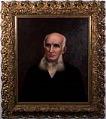
Portrait of Thomas Mercer by Edwin Isaac Ames, ca. 1870-1900
Thomas Mercer (1813-1898) was born in Ohio and came to Seattle in 1852 with Aaron Mercer, his father, Dexter Horton, David Bagley, and William H. Showdy. His first wife died in 1853 and he remarried in 1859. He owned a dairy farm, was a probate judge for ten years, and was one of the first county commissioners. Artist Edwin Isaac…
ID Number:1946.407.b
Date:Circa 1870-1900

Oil portrait of Ezra Meeker by Harriet Foster Beecher, 1914
Ezra Manning Meeker (1830-1928) was born in Iowa and traveled the Oregon Trail eventually settling in what would become Puyallup, Washington, in 1862. He grew hops for brewing beer and he was known as the "Hop King of the World," as his agricultural business made him a wealthy man. Unfortunately, an infestation of hop aphids in 1891 destroyed his crops…
ID Number:1953.303.13
Date:1914
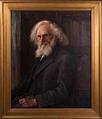
Oil portrait of Ezra Meeker by Harriet Foster Beecher, 1914
Portrait of Ezra Meeker (1830-1928) in his old age. Meeker had been an early white settler of the area who traveled from Iowa and farmed hops in Puyallup. He later advocated for the preservation of the Oregon Trail, which he and his family had used to travel west, and is credited with spearheading its preservation. The artist, Harriet Foster Beecher…
ID Number:1953.303.14
Date:1914
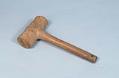
Handmade wooden kitchen mallet, ca. 1860
This mallet was made from the limb of an apple tree that was on the Foster family farm, an early white settlement.
ID Number:1956.1058.4
Date:Circa 1860

Portrait of Ezra Meeker at age 96 by Louise Crow, 1926
Ezra Manning Meeker (1830-1928) was born in Iowa and traveled the Oregon Trail eventually settling in what would become Puyallup, Washington, in 1862. He grew hops for brewing beer and he was known as the "Hop King of the World," as his agricultural business made him a wealthy man. Unfortunately, an infestation of hop aphids in 1891 destroyed his crops…
ID Number:1956.1145.1
Date:1926
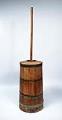
Wooden butter churn, ca. 1900
This churn was from the Tourtellotte family Janalu Farm once located on Avondale Road near Cottage Lake. The farm was in operation until the mid 20th century.
ID Number:1960.1913.2
Date:Circa 1900
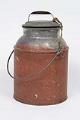
Galvanized metal milk can or water can, ca. 1900-1920
In the early 20th century, metal cans like this one were used to transport milk from dairy farms to markets and customers. Old cans would sometimes also be used for other household storage purposes.
ID Number:1961.2414.3
Date:Circa 1900-1920
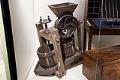
Cider press, 1866
John Denny, father of Arthur Denny, brought this cider press to Seattle in 1869 for use on the family's farm located between Pike and Union Streets on Seventh Avenue. The press works by grinding up the apples into pulp and pressing the juices out into a bucket.
ID Number:1963.3196.1
Date:1866
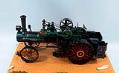
J. I. Case Threshing Machine Co. steam tractor model, early 1900s
Eugene F. Dawson constructed this model tractor sometime in the early 1900s. He worked for John Deere and Company in Waterloo, Iowa, before WWI and continued his job as a troubleshooter for the tractor company after the war. He moved to Seattle in 1921. By the 1940s, he had established Dawson Machinery Company and Dawson Tool and Abrasive Company. As…
ID Number:1965.3533.1
Date:Circa 1900-1920