157 results for: Transportation
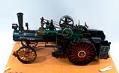
Scale model of a Royal Chester Steam Engine Tractor, 1953
This tractor engine model was made by Eric Wood in Victoria, BC, Canada, in 1953, and took nearly 2,000 hours to build. The full scale engine built by William Allchin Ltd. in Northampton, England, in 1925, and it was the last engine ever constructed by this steam engine manufacturer.
ID Number:1977.6449.1
Date:1953
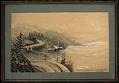
Original drawing depicting Lake Washington Boulevard and shoreline in Seattle by A. G. McGraney, 1910
This wash drawing, signed by local artist A.G. McGraney on 2/14/1910, shows an early auto route along the shores of Lake Washington. The first affordable, assembly-line made automobile, the Ford Model T, was first produced in 1908, so this road is an early adoption of this new form of travel.
ID Number:1977.6499.1
Date:1910

City of Seattle traffic signal, ca. 1950
Removed from an unknown intersection in the city of Seattle, this type of traffic signal was first introduced after World War II. It is a pedestrian walk signal with a red "WAIT" light on top, and a green "WALK" light on the bottom.
ID Number:1979.6818
Date:Circa 1950
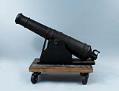
Cannon from Imperial Russian Navy sidewheel gunboat, the POLITKOFSKY, ca. 1850s
Built by the Russians in Sitka, the POLITKOFSKY came under United States ownership in 1867 when Russian Alaska was sold to the US. The gunboat was then sold into civilian service as a tugboat, POLLY, working the northwest coast of North America until 1896. It was then converted to a schooner barge and carried eager gold seekers to Alaska during…
ID Number:1980.7094.423
Date:Circa 1850
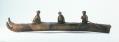
Model kayak made by native Alaskan artist, ca. 1900
This model kayak, made of leather from a seal or other marine animal, is part of a large collection of native American and native Alaskan materials collected by Fred Anhalt and donated to MOHAI. Frederick Anhalt (1896-1996) was a Seattle builder who constructed more than forty buildings in this city between 1925 and 1942. Three of Anhalt's buildings were given…
ID Number:1981.7357.77
Date:Circa 1900
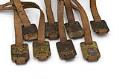
Set of brass luggage claim check tags from Seattle Steamship Company, ca. 1900-1920
The Seattle Steamship Company waiting room was located at the White Star Dock at the foot of Spring Street. In the early twentieth century, travellers most likely received their baggage claim checks at this location before boarding. The numbers on these tags include: 108, 302, 375, 492, 719, 725,773, and 794.
ID Number:1984.20.ONLINE
Date:Circa 1900-1920
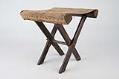
Folding stool from a Lake Washington ferry, ca. 1930
Captain John Anderson started the Anderson Steamboat Company and Lake Washington Ferries, providing ferry service across Lake Washington before roads and bridges connected Eastside communities to Seattle. Anderson bought his first passenger steamer, the Winnifred, in 1895, and by 1909, held a monopoly on Lake steamers. The company was in direct competition with King County ferry services. He made most…
ID Number:1986.8.1
Date:Circa 1930
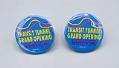
Two buttons, "Transit Tunnel Grand Opening," 1990
On September 15, 1990, Metro Transit buses began regular service in the new downtown Seattle transit tunnel. The newly introduced "dual-mode" buses were used that switch from diesel to electric power upon entering the 1.3 mile tunnel. Construction of the tunnel began on March 6, 1987, and was completed on schedule three and a half years later.
ID Number:1993.43.176
Date:1990
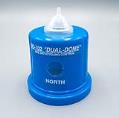
Dual-Dome Streetlight anti-cycling control device, patent model, 1993
Frederick Blake of Mill Creek, Washington, invented this "Fiber-Optic Anti-Cycling Device for Street Lamps." It is an energy-saving device that detects defects in High Pressure Sodium (HPS) streetlights that cycle on and off throughout the night. These defects may lead to further mechanical damage and wasted energy. The Dual-Dome stops the light from attempting to cycle on and off, then…
ID Number:1996.02.1
Date:1993

Cup and saucer with images of the Lake Washington Floating Bridge, ca. 1940
This souvenir teacup and saucer features images of the Lake Washington Floating Bridge (later called the Lacey V. Murrow Memorial Bridge). It was the first large-scale floating bridge ever constructed and opened to traffic on July 2, 1940. The concrete roadway from Seattle to the eastern shore of Lake Washington floats on pontoons which are anchored to the lake bottom.…
ID Number:1996.39.3
Date:1940-1950