173 results for: Manufacturing
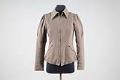
Jacket, "Nomi" from Prairie Underground, 2005
Prairie Underground was founded in Seattle in 2004 by designers Camilla Eckersley and Davora Lindner. This “Nomi” jacket is from their second collection in Fall of 2005. At the time, Eckersley was still sewing all the sales prototypes and sewed this garment. The design is detailed and complex so initially they had a challenge finding a local contractor who would…
ID Number:2013.117.2
Date:2005
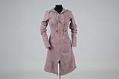
"Prairie" hoodie from Prairie Underground, 2005
Prairie Underground was founded in Seattle in 2004 by designers Camilla Eckersley and Davora Lindner. This “Prairie Hoodie” from their first collection in 2005 is one that garnered the most attention from store buyers and retail customers. These long duster-style sweatshirts quickly became a signature for the company. This version features deconstructed darts on the pocket, inspired by sunrays and…
ID Number:2013.117.3
Date:2005
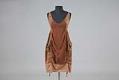
"Hard Times" dress from Prairie Underground, 2006
Prairie Underground was founded in Seattle in 2004 by designers Camilla Eckersley and Davora Lindner. This “Hard Times Dress” from 2006 represents a bolder and more confident design direction for the young company. The dress was the first to garner media attention after two Nylon magazine editors became fans of the dress and decided to feature Eckersley and Lindner as…
ID Number:2013.117.4
Date:2006
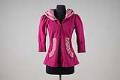
Hoodie, "Cloak" from Prairie Underground, 2007
Prairie Underground was founded in Seattle in 2004 by designers Camilla Eckersley and Davora Lindner. This “Cloak Hoodie” is a sales sample from 2007 and features several design elements that would become signatures for the company. It features a dramatic puffy hood which can be folded down to create a cloak-like effect over the shoulders, puffed sleeves, a fitted bust,…
ID Number:2013.117.5
Date:2007
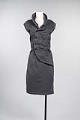
Prairie Underground "Mothette" dress, 2008
This dress, titled the “Mothette,” wraps around the body like a cocoon. It is made of soft French terry cloth and has cording in the bodice, which enables it to adjust to varying torso lengths. Prairie Underground designers Camilla Eckersley and Davora Lindner are five feet five and six feet one, respectively. They are interested in creating garments that suit…
ID Number:2013.117.6
Date:2008
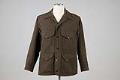
Olive green Filson jacket, ca. 1951
Filson was founded in Seattle in 1897 to outfit Klondike Gold Rush miners for harsh conditions. They soon became known as suppliers of high-quality gear for all kinds of outdoor professions, adventurers, and hobbyists. This heavy wool jacket belonged to the donor’s father, Paul Sanders. He wore it for hunting, fishing, and just walking in the woods. It was a…
ID Number:2014.54.1
Date:Circa 1951
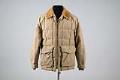
Eddie Bauer down jacket, ca. 1962
Seattle outdoorsman and entrepreneur Eddie Bauer (1899-1986) helped bring high-quality outdoor gear to a wider audience. His company was established in 1920, and in 1940 Bauer patented the first quilted down jacket. This coat, from Bauer’s “Blizzard Proof” line, belonged to John Stuart Miller. Miller was an engineer who worked both in Seattle and Fairbanks, Alaska. This coat was purchased…
ID Number:2015.71.1
Date:1962
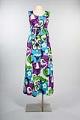
Blue, green, and teal cotton dress made by Marontate-Jones Inc., ca. 1960s-1970s
This casual cotton day dress has a bold print and opens with buttons all the way down the front. It would be a perfect swim cover-up, or dress for a backyard party on a warm weekend. It was made by the Marontate-Jones Company of Seattle. Founded by Fred Marontate and Frank Jones, the business was one of Seattle’s oldest and…
ID Number:2016.4.1
Date:Circa 1960-1970
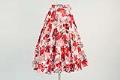
Pink and red circle skirt, ca. 1950s
This cotton circle skirt has an exuberant red and pink printed pattern. It was made by Foster-Hochberg Manufacturing, one of the leading clothing companies in Seattle in the 1950s and 60s. Foster-Hochberg specialized in casual sportswear for women and teen girls.
ID Number:2016.4.2
Date:Circa 1950
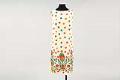
Patterned shift dress from Sailmates, 1960s
This dress has a label for “Sailmates Seattle,” one of the clothing lines designed and made by Foster-Hochberg Manufacturing. In the 1950s and 1960s Foster-Hochberg was one of Seattle’s leading clothing manufacturers, specializing in casual sportswear for women and teen girls.
ID Number:2016.4.3
Date:Circa 1960