102 results for: Home and Family
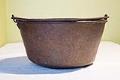
Copper kettle, 1830-1880
This kettle was originally owned and used by Caroline (McGilvra) Burke, daughter of early settlers John and Elizabeth McGilvra who arrived in Seattle in 1861, and wife of prominent Seattle judge Thomas Burke.
ID Number:1980.7094.41
Date:1830-1880
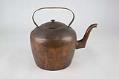
Teakettle used by Burke family, ca. 1830-1880
This kettle belonged to Caroline McGilvra Burke, wife of prominent Seattle judge Thomas Burke and daughter of early Seattle settlers John and Elizabeth McGilvra. The McGilvras first arrived in Seattle in 1861. This kettle may have been used around that time or even earlier. Prior to 1851, most kettles were created by hammering the metal over a form and dovetailing…
ID Number:1980.7094.42
Date:Circa 1830-1880
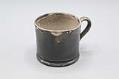
Child's milk mug that burned in the Seattle Fire of 1889
The Great Fire of June 6, 1889 was a significant turning point in Seattle's history and changed both the physical and political landscapes of the city. The fire started in a paint and woodwork shop at Front and Madison and swept southward across 100 acres of Seattle's business district and waterfront. The inferno completely consumed the business district's wooden buildings,…
ID Number:1984.29
Date:Circa 1880
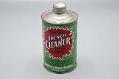
Can of "Bartell French Cleaner," early 20th century
Bartell Drugs, established in 1890, was one of the oldest and long-standing family-owned stores in Seattle until it was sold to Rite Aid in 2020. George H. Bartell Sr. (1868–1956) purchased the Lake Washington Pharmacy at 2711 South Jackson Street in Seattle's Central District in 1890, and that was the beginning of a long-lived and beloved Seattle business.
ID Number:1989.7
Date:Circa 1900-1920
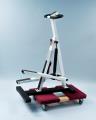
Precor Stair Climber, 1989
Founded in 1980 in Bothell, Washington, Precor (Precision Corporation) became one of the largest manufacturers of high-end fitness equipment in the 1980s. Their product line included stationary bicycles, treadmilss, rowing ergometers and stairclimbers for both fitness clubs and home use. The model 718e is a low impact stair climber advertised to slim and tone the body, and provide cardiovascular conditioning.
ID Number:1990.89.1
Date:1989
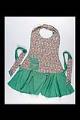
Homemade sleeveless cotton apron, ca. 1930s
This homemade 1930s apron was likely made from scraps of garments that were too worn or out-of-style to wear. Reuse of clothing fabric was common in the 19th and early 20th centuries, and particularly so during the Great Depression in the 1930s. This apron was from the household of Calista May Sterns Olsen (1904-1994) and Albert C. J. Olsen (1895-1983)…
ID Number:1993.30.23.c
Date:Circa 1930
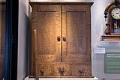
Maple desk top made by Henry Van Asselt, ca. 1860
European American settlers in the Puget Sound region made whatever household goods they couldn’t bring with them. Henry Van Asselt, one of the earliest homesteaders, was a talented carpenter. He made this desktop for early settler Thomas Mercer.
ID Number:1993.76.1
Date:Circa 1860
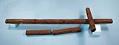
Cross that was placed in the front yard of a Bothell home, 1991
This eight foot cross, made from cherry wood fence timber, was built by a young adult Bothell resident in protest of a Black family living in the neighborhood in 1991. Several young men helped place the cross in the front yard of the family and the base was set on fire. When a member of the family flashed the porch…
ID Number:1996.44.1
Date:1991
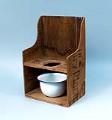
Potty chair made from a Carnation milk crate, ca. 1910-1920
Necessity is the mother of invention so they say. This unique potty chair was handmade using a milk crate from the Carnation Milk Company. In 1889, Amos Eldridge Stuart founded the Pacific Coast Condensed Milk Company in Kent, Washington. He changed the name to Carnation Evaporated Milk Company in 1901 and established a cow breeding farm in Tolt, Washington. The…
ID Number:1999.6.31
Date:Circa 1910-1920
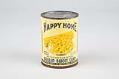
Can of “Happy Home Sweet Corn” from Schwabacher Bros. & Co., ca. 1930s
The Schwabacher Brothers, Louis (1837-1900), Abraham (1838-1909), and Sigmund (Sig) (1841-1917), were pioneering Bavarian-born Jewish merchants, important in the economic development of the Pacific Northwest. They owned several businesses bearing their family name, and opened a branch store in Seattle in 1869. Within a short time, the firm became Puget Sound's major wholesaler of canned goods, dry goods, and other…
ID Number:1999.6.86
Date:Circa 1930