136 results for: Government and Public Services
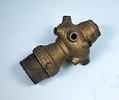
Fire hose nozzle, ca. 1910-1920
This Bresnan Distributor nozzle, named after its inventor, a New York Fire Department battalion chief, was used mainly to fight fires under the wharves. The Paul Nels Carlson Company donated this fire hose nozzle and they may have discovered it buried in the ground during their construction of various buildings in Seattle, including the Olympic Hotel and Fifth Avenue Theater.
ID Number:1976.6213.4
Date:Circa 1910-1920
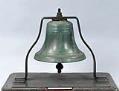
Ship's bell from the ferry CHIPPEWA, ca. 1905
The CHIPPEWA was the oldest ferry in Washington State's fleet. Built in 1900 in Ohio and sold to the Puget Sound Navigation Company in 1907, the CHIPPEWA travelled around the tip of South America to reach Seattle. The ferry was in operation from 1907 to 1964, carrying passengers and later cars all around Puget Sound including Seattle, Victoria, and Bellingham.
ID Number:1976.6295.1
Date:Circa 1905
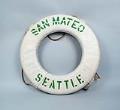
Life preserver ring from ferry San Mateo, ca. 1947-1969
The S.S. San Mateo, part of the Evergreen fleet of ferries, operated on several different runs throughout the Puget Sound during its service.
ID Number:1976.6295.2
Date:Circa 1947-1969
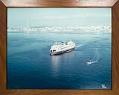
Color photograph of the ferry Hyak in Puget Sound, reprinted by Forest and Whitmire Photography, ca. 1970
The MV Hyak Super-class ferry was built in 1966 at a San Diego shipyard and began service in July 1967. It would ferry passengers from Seattle to Bremerton and from Anacortes to the San Juan Islands. Hyak is chinook jargon for "speedy."
ID Number:1976.6295.18
Date:Circa 1970
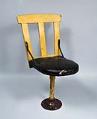
Operator's seat from Seattle cable car, early 1900s
Seattle had its first cable car line in 1887 that went from Pioneer Square to Leschi Park via Yesler Way and Jackson Street. More lines were built around the city and, by 1892, there were 48 miles of streetcar track and 22 miles of cable railways. As a result of debt and the growing auto industry, the streetcar system was…
ID Number:1976.6387
Date:Circa 1900-1940
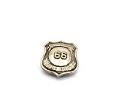
Seattle Fire Department badge no. 66, ca. 1900
Fire response and rescue Seattle was originally a volunteer-driven organization overseen by the City of Seattle. As a result of the disastrous Great Seattle Fire in June 1889, the Seattle Fire Department was officially established later that year as a paid professional department.
ID Number:1978.6700.9
Date:Circa 1900
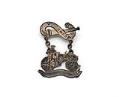
Pin, "Foreman, Seattle Fire Dept," ca. 1900
Fire response and rescue Seattle was originally a volunteer-driven organization overseen by the City of Seattle. As a result of the disastrous Great Seattle Fire in June 1889, the Seattle Fire Department was officially established later that year as a paid professional department.
ID Number:1978.6700.12
Date:Circa 1900
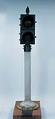
City of Seattle traffic signal, ca. 1950
Removed from an unknown intersection in the city of Seattle, this type of traffic signal was first introduced after World War II. It is a pedestrian walk signal with a red "WAIT" light on top, and a green "WALK" light on the bottom.
ID Number:1979.6818
Date:Circa 1950
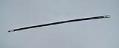
Swagger stick or pointer, ca. 1900
Swagger sticks are short staffs or canes and were once carried by uniformed persons of authority, specifically in the Marines. This stick has the City of Seattle crest and the words "Seattle Washington Enterprise."
ID Number:1979.6847.2
Date:Circa 1900
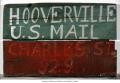
Post Office sign from Hooverville in Seattle, ca. 1930
During the hard times of the late 1920s and 1930s, many unemployed and homeless people settled just west of where Seattle's stadiums now stand. The men, and several women, built ramshackle houses out of scrap material, set up a post office, and elected their own mayor. The area was nicknamed "Hooverville" by people who blamed President Herbert Hoover for causing…
ID Number:1980.7029.1
Date:Circa 1930