696 results for: Clothing
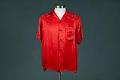
Sick's Select bowling shirt, made by Bencoe Co., ca. 1941-1944
Sick’s Select Beer was produced by the Seattle Brewing & Malting Company which was owned and run by Emil Sick. It was introduced in 1941 and in 1944 the name was changed to Sicks’ Select. It is possible that these shirts were made for an employee bowling team at the brewery. The shirt was made in Seattle by the Bencoe…
ID Number:2022.7.1
Date:Circa 1941-1944
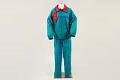
Teal and red Goodwill Games windbreaker jacket, 1990
This jacket, shown here with a pair of coordinating track pants, was issued to volunteers at the Seattle Goodwill Games in 1990. The jacket incorporates all the colors of the Goodwill Games logo: teal, blue, and red. The games ran from July 20 to August 5, 1990, and were a huge undertaking for the city. Conceived by Ted Turner as…
ID Number:2022.26.1
Date:1990
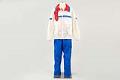
White and red Goodwill Games windbreaker jacket, 1990
This jacket, shown here with a pair of coordinating track pants, was issued to volunteers at the Seattle Goodwill Games in 1990. The jacket includes colors from the Goodwill Games logo. The games ran from July 20 to August 5, 1990, and were a huge undertaking for the city. Conceived by Ted Turner as an apolitical alternative to the Olympics,…
ID Number:2022.26.2
Date:1990
Teal Goodwill Games track pants, 1990
These track pants, shown here with a coordinating jacket, was issued to volunteers at the Seattle Goodwill Games in 1990. Teal was one of the colors in the official Goodwill Games logo. The games ran from July 20 to August 5, 1990, and were a huge undertaking for the city. Conceived by Ted Turner as an apolitical alternative to the…
ID Number:2022.26.3
Date:1990
Blue Goodwill Games track pants, 1990
These track pants, shown here with a coordinating jacket, was issued to volunteers at the Seattle Goodwill Games in 1990. This blue was one of the colors in the official Goodwill Games logo. The games ran from July 20 to August 5, 1990, and were a huge undertaking for the city. Conceived by Ted Turner as an apolitical alternative to…
ID Number:2022.26.4
Date:1990
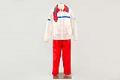
Red Goodwill Games track pants, 1990
These track pants, shown here with a coordinating jacket, was issued to volunteers at the Seattle Goodwill Games in 1990. Red was one of the colors in the official Goodwill Games logo. The games ran from July 20 to August 5, 1990, and were a huge undertaking for the city. Conceived by Ted Turner as an apolitical alternative to the…
ID Number:2022.26.5
Date:1990
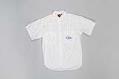
White Shah Safari shirt from the Goodwill Games, 1990
On July 20, 1990, the Goodwill Games opened in Seattle. Conceived as an apolitical alternative to the Olympics, the games promised international goodwill through world-class competition. Over 2,000 athletes from 54 countries competed in 21 sports events at the University of Washington and other cities in Washington State. Seattle company Shah Safari supplied these shirts to volunteers for the games.…
ID Number:2022.26.6
Date:1990
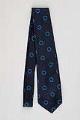
Dark blue Brase & Company necktie from the Goodwill Games, 1990
On July 20, 1990, the Goodwill Games, sponsored in large part by Ted Turner, opened in Seattle. Conceived as an apolitical alternative to the Olympics, the games promised international goodwill through world-class competition. Over 2,000 athletes from 54 countries competed in 21 sports events at the University of Washington and other cities in Washington State. This souvenir necktie was made…
ID Number:2022.26.7
Date:1990
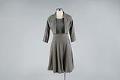
Three-piece ensemble from Chamberlin’s Handwovens, 1950s
The Washington Training Center for the Blind was started in 1939 and one of their key programs involved weaving. Students were trained to weave fabrics and then were employed through the center. An affiliated nonprofit called Handcrest distributed and sold goods, but other businesses sourced fabrics and employed craftspeople through the training center. One such was Chamberlin’s Handwovens which opened…
ID Number:2022.40.1
Date:Circa 1950
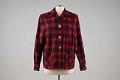
Red plaid shirt from Foster-Hochberg, 1940s-1960s
This red plaid jacket has shoulder pads and a boxy shape. It was made by Foster-Hochberg Manufacturing, one of the leading clothing companies in Seattle in the 1950s and 1960s. Foster-Hochberg specialized in casual sportswear for women and teen girls.
ID Number:2022.40.6
Date:Circa 1940-1960