32 results for: Activism
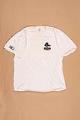
ACT UP T-shirt with somber facts about AIDS on the back, owned by Philip Bereano, co-founder of ACT UP Seattle, ca. 1990
ACT UP stands for AIDS Coalition to Unleash Power and advocated for immediate and significant action to fight the AIDS crisis. ACT UP's radical style unleashed a new era of direct-action gay and lesbian political activism. This shirt was donated by ACT UP Seattle co-founder Philip Bereano.
ID Number:2014.56.RefTshirt
Date:Circa 1990
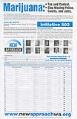
Signature petition for Initiative 502: Marijuana: Tax and Control, 2012
This is a campaign signature petition for the I-502 Washington State initiative to legalize recreational marijuana. The initiative was voter-approved and became law in 2012. The measure licenses and regulates marijuana production, distribution, and possession for persons over twenty-one; removes state-law criminal and civil penalties for activities that it authorizes; taxes marijuana sales; and earmarks marijuana-related revenues.
ID Number:2015.46.2
Date:2012
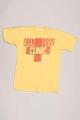
Open Door Clinic T-shirt, ca. 1970s
The Open Door Clinic (ODC) was a volunteer social service agency and free clinic that operated in Seattle's University District. The clinic opened in 1967 as the first 24-hour multiservice center in the state, founded by a group of medical professionals, students, social workers and others interested in human services. Until 1980, when it closed because of a lack of…
ID Number:2015.47.6
Date:Circa 1970
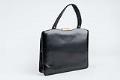
Black purse, ca. 1960
This bag belonged to Louise McKinney (1930-2012), educator, community activist, arts patron, and wife of Reverend Samuel B. McKinney of Mount Zion Baptist Church. She used this purse frequently in the early 1960s, but most notably carried it with a floral suit from Best’s Apparel (MOHAI artifact 2018.10.2) during an event with Dr. Martin Luther King, Jr. King and Reverend…
ID Number:2018.10.4
Date:Circa 1960
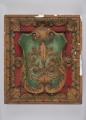
Plaster of Paris decorative tile from interior of the Music Hall Theater, ca. 1929
The Music Hall originally opened as the Fox Theatre on April 19, 1929, and was located at Seventh Avenue and Olive Street. When the Clise family purchased the venue in 1936, it was renamed the Music Hall. By the 1980s, the venue was losing money for the Clises and they decided to tear it down in 1988 to make way…
ID Number:2019.50.1
Date:Circa 1929
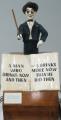
Mechanical figure, "Dr. Wise," an alcohol temperance display used by the Washington State Chapter of the Woman's Christian Temperance Union (WCTU), 1920s
This mechanical display is related to the Prohibition efforts in Seattle and Washington State in the 1920s and later. Several versions of this mechanical figure was traveled around the country by the Woman's Christian Temperance Union (WCTU) to promote abstinence from alcohol, including after the repeal of Prohibition. Referred to as "Charlie" or "Dr. Wise," this particular display that was…
ID Number:2020.16.1
Date:Circa 1920
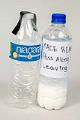
Two plastic bottles of homemade eyewash used during the racial justice protests in Seattle in June, 2020
These recycled plastic water bottles held homemade eyewash solutions for treating effects of chemical agents like teargas and pepper spray used by police on protesters during the June protests for racial justice, 2020. They were collected by MOHAI staff from Cal Anderson Park in the Capitol Hill neighborhood of Seattle.
ID Number:2020.Protest.1
Date:2020
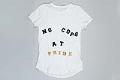
White T-shirt, "No Cops at Pride," made and worn at Pride events in 2019
This T-shirt was donated by Soren, a member of the MOHAI Youth Advisors (MYA) program for high school students. It was created in 2019 and displayed as part of the MOHAI exhibit "Stand Up! Seattle: The Democracy Project" in 2020 and 2021. Soren had this to say about the shirt: “Pride started as a protest against a police raid on…
ID Number:2021.Kopp
Date:2020
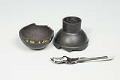
Three remnant pieces of a flash-bang grenade from the World Trade Organization (WTO) protests, 1999
These flashbang grenade remnants are from the night of December 1st, 1999, during the World Trade Organization (WTO) protests in Seattle. The 1999 protests against the WTO Summit made international news. Deemed the “Battle of Seattle,” police and the National Guard used tear gas, rubber and wooden bullets, and other deterrents to disperse crowds. The donor of this artifact was…
ID Number:2022.12.1
Date:1999
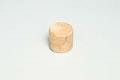
Wooden bullet from the World Trade Organization (WTO) protests, 1999
This wooden bullet is from the night of December 1st, 1999, during the World Trade Organization (WTO) protests in Seattle. The 1999 protests against the WTO Summit made international news. Deemed the “Battle of Seattle,” police used tear gas, rubber and wooden bullets, and other deterrents to disperse crowds. The donor of this artifact was in the midst of the…
ID Number:2022.12.2
Date:1999