35 results for: Northwest Coast Native Peoples
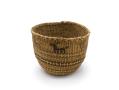
Coast Salish twined basket, ca. 1900-1940
This basket with its dog or wolf design is thought to be made by the Twana people who lived in the region around Hood Canal in the south Puget Sound.
ID Number:1964.3334.13
Date:Circa 1900-1940
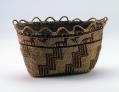
Skokomish twined basket, ca. 1900
The Skokomish Tribe was originally primarily composed of Twana Indians, a Salishan people from the Hood Canal drainage basin in western Washington State. The Twana subsisted on hunting, fishing and gathering activities, moving around in warmer weather and settling on more permanent sites during colder climes. Twana descendants live on the Skokomish Reservation, and all have become known as the…
ID Number:1965.3775.8
Date:Circa 1900
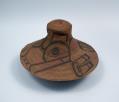
Painted spruce root woven hat, Tlingit, ca. 1900-1920
This woven Tlingit hat features a flaring brim and formline designs painted on the exterior.
ID Number:1969.4792.9
Date:Circa 1900-1920
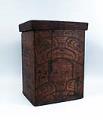
Painted bentwood storage box, undated
This Tlingit bentwood box features bear designs and 24 opercula shells embedded in the lid. This type of container is generally made from one piece of wood that is steamed and bent to form a box.
ID Number:1969.4792.10
Date:Before 1950
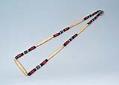
Trade bead necklace, ca. 1910
This necklace was collected by Aubrey Archer in the early part of the 20th century. His father, Finch R. Archer, was the Alotting Agent for the Quinault, Queets, and Hoh tribes from 1906 to 1912. He was in charge of alotting these government land to these tribes. Aubrey worked with his father during school vacations.
ID Number:1970.4971.2
Date:Circa 1910
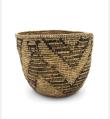
Coiled cedar basket, Skokomish, ca. 1900
This basket, although highly decorated, was well used for activities such as berry picking or food storage. It is made from cedar bark, cedar root, horsetail root, and beargrass.
ID Number:1972.5396
Date:Circa 1900
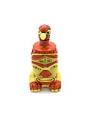
Painted ceramic Potlatch "Bug" souvenir, ca. 1911
This Potlatch “Bug” is a souvenir of the Golden Potlatch, a city-wide festival first held in July of 1911. It was organized by civic boosters who were hoping to capitalize on the success of the Alaska-Yukon-Pacific Exposition of 1909. The organizers called themselves the Tilikums of Elttaes (Tilikum is "Friends" in Chinook Jargon; Elttaes is Seattle spelled backward). They were…
ID Number:1972.5567.46
Date:1911
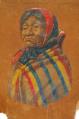
Hide painting of Kikisoblu (Princess Angeline) by Carrie Monroe (C.M.) Gilbert, ca. 1900-1915
Kikisoblu (Princess Angeline), also known in Lushootseed as Kikisoblu, Kick-is-om-lo, or Wewick, was the eldest daughter of Chief Si'ahl (Chief Seattle). She was born around 1820 and lived until she was in her mid-seventies. This portrait is reproduced from a photograph. The artist, Carrie Monroe Gilbert (1871-1956), lived in Oregon and was known for her portraits of Indigenous people of…
ID Number:1980.6980.1
Date:Circa 1900-1915
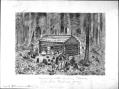
Watercolor drawing, "Bargaining with Indian Traders (at Alki Point in 1851)," by Emily Inez Denny, ca. 1870-1915
The daughter of one of Seattle’s founding families, Emily Inez Denny (1853 – 1918) was both a painter and writer. Greatly influenced by seeing the drawings of Sarah Willoughby as a student at the Washington Territorial University, she took on painting as a life-long pursuit. This scene was created by the artist based on stories told to her by her…
ID Number:1984.74.1
Date:Circa 1870-1915
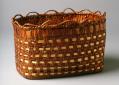
Quileute or Makah twined basket, ca. 1900
This basket is part of a large assortment of Indigenous baskets collected by Clara Young (1890-1983). Young was a schoolteacher in the early part of the 20th century and, from 1914-1915, she taught at a small schoolhouse located on the outer Washington coast near LaPush and Mora. This particular collection represents a time in Northwest Coast basketry when styles changed…
ID Number:1985.40.36
Date:Circa 1900