20 results for: Biotechnology and Medical Research
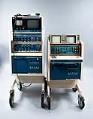
Mark II ultrasound machine, ca. 1976
The ATL Mark III Ultrasound Device represented a major breakthrough in medical imaging because it incorporated the first real time digital scan converter, which allow real-time and freeze frame display of ultrasound images on conventional video monitors. Advanced Technology Laboratories (ATL) was founded in 1969 by a group of engineers working on marine electronic systems. In 1974 ATL and the…
ID Number:2008.33.Ref
Date:Circa 1976
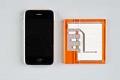
Prototype of a "Lab on a Chip," ca. 2011
Developed at the University of Washington with funding from the Gates Foundation, the goal of this "Lab on a Chip" or "two-dimensional paper network" (2DPN) technological device was to make diagnosing infectious illnesses simple and cost effective with just the use of a paper version of PCR (polymerase chain reaction) testing and a camera on a cell phone.
ID Number:2012.56.1
Date:Circa 2011
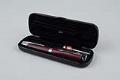
HumaPen Memoir digital insulin pen with case, ca. 2012
The HumaPen Memoir, developed by the Battelle Seattle Research Center, helps patients manage their insulin dosages by making it easier to learn, use, and carry. The device uses insulin cartridges and allows the user to dial the amount of insulin they need to take. It records when a dose has been taken and automatically loads a fresh needle each time.
ID Number:2012.62.1
Date:Circa 2012
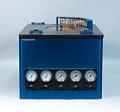
DNA Synthesizer 3900, designed and built in 1998
This DNA Synthesizer was designed by Gary McLuen, a local engineer and innovator, and it was used for the human genome project (1984-2003). It is one of the first and most successful automated DNA synthesizers on the market.
ID Number:2017.32.1
Date:1998
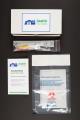
Seattle Flu Study influenza test kit, 2019
The Seattle Flu Study was started in 2017 and led by the Brotman Baty Institute for Precision Medicine (a collaboration between the University of Washington, Seattle Children’s Hospital, and Fred Hutchinson Cancer Research Center). A chief goal is the surveillance of respiratory pathogens active in the city. For winter 2019-2020, the Seattle Flu Study planned to survey and swab people…
ID Number:2021.70.1
Date:2019

Model of COVID-19 Vaccine developed by the University of Washington in 2020
This is a model of the vaccine developed by the Institute for Protein Design (IPD) at the University of Washington. This vaccine uses a structure-based vaccine design technique which was developed by the King Lab (named for lead Neil King) at the IPD. The red is the receptor binding domain, part of the spike of the SARS-COVID virus. This is…
ID Number:2021.80.1
Date:2019-2021
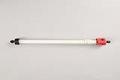
Column used for vaccine development at the University of Washington in 2020
This device was used in vaccine development at the Institute for Protein Design (IPD) at the University of Washington, with scientists Alexandra (Lexi) Walls and Brooke Fiala as project leads. Fiala used this column to prepare (or purify) the vaccine. This particular vaccine uses a structure-based vaccine design technique which was developed by the King Lab (named for lead Neil…
ID Number:2021.80.2
Date:2019
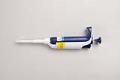
Pipette used for vaccine development at the University of Washington in 2020
This device was used in vaccine development at the Institute for Protein Design (IPD) at the University of Washington, with scientists Alexandra (Lexi) Walls and Brooke Fiala as project leads. Fiala used this pipette in the production of the vaccine which uses a structure-based vaccine design technique developed by the King Lab (named for lead Neil King) at the IPD.…
ID Number:2021.80.3
Date:2019
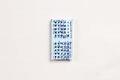
Grid box holder used for vaccine development at the University of Washington in 2020
These grid box holders were used in vaccine development at the Institute for Protein Design (IPD) at the University of Washington. They contain tiny pieces of copper coated in carbon which enables one to look at proteins under an electron microscope and assure that the development is proceeding as expected. The two head scientists of the project were Alexandra (Lexi)…
ID Number:2021.80.4
Date:2019
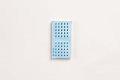
Grid box holder used for vaccine development at the University of Washington in 2020
These grid box holders were used in vaccine development at the Institute for Protein Design (IPD) at the University of Washington. They contain tiny pieces of copper coated in carbon which enables one to look at proteins under an electron microscope and assure that the development is proceeding as expected. The two head scientists of the project were Alexandra (Lexi)…
ID Number:2021.80.5
Date:2019