184 results for: European American Settlement
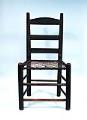
Side chair made by Henry Van Asselt, ca. 1860s
Henry Van Asselt settled in the Seattle area in 1851, intending to make his living through agriculture. When his first homestead was burned in the Battle of Seattle of 1856, he left the area for the Willamette Valley of Oregon, where he polished his cabinet-making skills. He opened up a cabinet shop upon his return to Seattle, and his furniture…
ID Number:1988.33.1
Date:Circa 1860
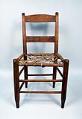
Slat back side chair made by Henry Van Asselt for the Maple family, 1870s
Henry Van Asselt settled in the Seattle area in 1851, intending to make his living through agriculture. When his first homestead was burned in the Battle of Seattle of 1856, he left the area for the Willamette Valley of Oregon, where he polished his cabinet-making skills. He opened up a cabinet shop upon his return to Seattle, and his furniture…
ID Number:1988.34.1
Date:Circa 1870
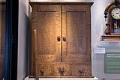
Maple desk top made by Henry Van Asselt, ca. 1860
European American settlers in the Puget Sound region made whatever household goods they couldn’t bring with them. Henry Van Asselt, one of the earliest homesteaders, was a talented carpenter. He made this desktop for early settler Thomas Mercer.
ID Number:1993.76.1
Date:Circa 1860
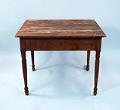
Table made by Henry Van Asselt for Thomas Mercer, ca. 1860s
Henry Van Asselt settled in the Seattle area in 1851, intending to make his living through agriculture. When his first homestead was burned in the Battle of Seattle of 1856, he left the area for the Willamette Valley of Oregon, where he polished his cabinet-making skills. He opened up a cabinet shop upon his return to Seattle, and his furniture…
ID Number:1993.76.2
Date:Circa 1860
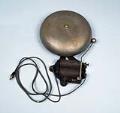
Bell from Denny School, ca. 1890-1930
The Denny School was built in Seattle on Battery Street between 5th and 6th Avenues in 1884. The bell tower still stands in Denny Park.
ID Number:1994.2
Date:Circa 1890-1930
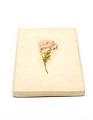
Small letter box containing dried sweet briar flowers and seeds from Louisa Boren Denny's garden, ca. 1928
This box of seeds and dried flowers came from a 1928 time capsule that was behind the plaque on the north wall of the Opera House in Seattle. The box was later added to a time capsule at the Seattle Center where it was eventually extracted in 2002, and then donated to MOHAI. The dried flowers are sweet briar rose…
ID Number:2003.41.3
Date:Circa 1928
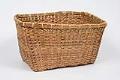
Duwamish carrying basket, attributed to Kikisoblu (Princess Angeline), ca. 1885
This basket was possibly made by Kikisoblu (Princess Angeline) to deliver clams and other materials to Seattle customers. Kikisoblu (ca. 1820-1896) was the daughter of Chief Si'ahl (Chief Seattle). The 1855 Treaty of Point Elliott required all Duwamish people leave Seattle to live on reservations, but Kikisoblu remained in a cabin on the waterfront. She earned a living doing laundry…
ID Number:2003.62.1
Date:1884-1896
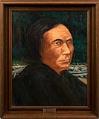
Portrait of Chief Leschi painted 1950-1960, artist unknown
Leschi was born to Nisqually and Yakama parents and grew up among the Nisqually people. When he was 25 years old, the Hudson Bay Company (HBC) built a fort at the mouth of the Nisqually River, and soon the HBC was farming throughout the plain. Leschi was working for the HBC in 1848 when Oregon Territory was created. Two years…
ID Number:2005.16.1
Date:1950-1960
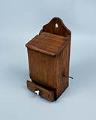
Handmade wooden salt grinder, 1880-1890
August Wenzel, a German immigrant, made this salt grinder. He operated a meat market, blacksmith shop, cooperage, and brewery in Seattle in the late 1880s and 1890s. August Wenzel also made beer barrels for the Hemrich Brothers Brewery, which later became Rainier Brewery.
ID Number:2005.60.1
Date:1880-1890
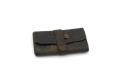
Robert Moran's wallet from when he first arrived in Seattle, ca. 1875
Robert Moran arrived in Seattle in 1875 with this empty wallet, but soon he became a successful shipbuilder and served as the city's mayor from 1888-1890.
ID Number:2006.35.160
Date:Circa 1875