259 results for: Innovation and Invention
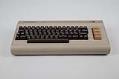
Commodore 64 computer, with manuals and accessories, ca. 1982
The Commodore 64 was considered a huge seller, and is perhaps the best selling computer ever. It had a base configuration of 6510 CPU and used Commodore BASIC (or PET BASIC) programming language, the core of which was based on 6502 Microsoft BASIC. The donor of this computer worked in information technology on main frame computers in the 1980s.
ID Number:2010.Computer.Commodore64
Date:Circa 1982
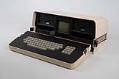
Osborne 1 portable computer, with manuals and accessories, ca. 1981
The Osborne 1 was the first "portable" computer released in 1981. Despite being powered by a wall socket, it is still considered a portable computer as it can be hand-carried (at 24.5 lbs) when the keyboard is closed. It ran on CP/M operating system software, was loaded with Microsoft BASIC, and had 64 KB RAM. The donor of this computer…
ID Number:2010.Computer.Osborne1
Date:Circa 1981
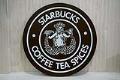
Starbucks sign, ca. 1971-1987
The first Starbucks Coffee opened in Seattle, Washington, on March 31, 1971, by three partners: Gordon Bowker, Jerry Baldwin, and Zev Siegl. The moniker, "Starbucks," comes from the name of the first mate in the Herman Melville novel, "Moby Dick," and the logo, a twin-tailed siren, is representative of Seattle's maritime heritage. The first Starbucks store was located in Seattle…
ID Number:2011.1.40.1
Date:Circa 1971-1987
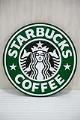
Starbucks sign, ca. 1990
The first Starbucks Coffee opened in Seattle, Washington, on March 31, 1971, by three partners: Gordon Bowker, Jerry Baldwin, and Zev Siegl. The moniker, "Starbucks," comes from the name of the first mate in the Herman Melville novel, "Moby Dick," and the logo, a twin-tailed siren, is representative of Seattle's maritime heritage. The first Starbucks store was located in Seattle…
ID Number:2011.1.40.2
Date:Circa 1990
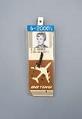
Boeing ID badge for employee K.E. Denby, 1971
This is an official Boeing ID badge decorated with a special "FirSST" pin. Boeing’s supersonic transport, the SST, was funded, then defunded. Concerns about noise and air pollution killed it in Congress. K.E. Denby left the company after the program was scrapped.
ID Number:2011.32.1
Date:1971
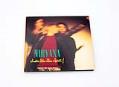
Nirvana, "Smells Like Teen Spirit," maxi-single compact disc, Sub Pop Records, Seattle, 1991
This is the breakout single by Nirvana, a band that had their beginnings in the Seattle grunge scene and widely popularized alternative rock. Members Kurt Cobain and Krist Novoselic were from Aberdeen, Washington.
ID Number:2011.92.37
Date:1991
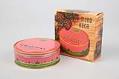
Tin and box for Brown & Haley Almond Roca candy, ca. 1960s
Brown & Haley, founded in Tacoma in the early 1900s and still in operation today, began as a candy company before WWI but hit it big with the invention of Almond Roca in 1923. In 1927, they began packaging it in a pink tin, which extended the shelf life. Besides the taste, it was the candy's ability to travel well…
ID Number:2011.112.3
Date:Circa 1961
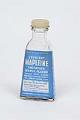
Bottle of Mapleine from Crescent Co., ca. 1950
The Crescent Manufacturing Company was founded in Seattle, Washington, in 1883 as Larsen Extract Company. In 1905, a Crescent company chemist and salesman concocted an imitation maple flavoring dubbed Mapleine. By the early twentieth century, Crescent was manufacturing 75 different extracts including Mapleine, as well as importing spices, coffee, and nuts. Crescent was sold to McCormick and Company in 1989,…
ID Number:2011.112.5
Date:Circa 1950
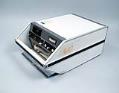
LIFEPAK 33 ® defibrillator/monitor from Physio-Control, Inc., ca. 1968
LIFEPAK 33 ® defibrillator/monitor from Physio-Control, Inc. was a revolutionary portable heart device. The same model was installed aboard Air Force One and Air Force Two, the aircraft assigned to carry the president and vice president of the United States.
ID Number:2012.28.3
Date:Circa 1968
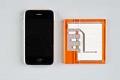
Prototype of a "Lab on a Chip," ca. 2011
Developed at the University of Washington with funding from the Gates Foundation, the goal of this "Lab on a Chip" or "two-dimensional paper network" (2DPN) technological device was to make diagnosing infectious illnesses simple and cost effective with just the use of a paper version of PCR (polymerase chain reaction) testing and a camera on a cell phone.
ID Number:2012.56.1
Date:Circa 2011