34 results for: Great Depression
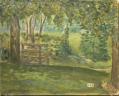
Painting of Denny Park before the Regrade by Julius Twohy, 1930-1940
The artist, Julius Twohy (1902–1986), was born in White Rocks, Utah, and was a member of the Ute tribe. He was also known as Land Elk and Two-vy-nah-auche. During the Great Depression, Twohy joined the local Federal Art Project becoming one of the few Native American muralists in the country. A member of the Washington Artist’s Union, Twohy exhibited at…
ID Number:1950.499
Date:1930-1940
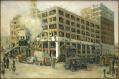
Painting of construction of the White-Henry-Stuart building by Fokko Tadama, 1914
Once located on 4th Avenue and Union Street, the three attached structures of the White-Henry-Stuart building were built from 1908-1915. The building was demolished in 1974 to make way for the Rainier Bank Tower. The artist, Fokko Tadama (1871–1937), was born in India and immigrated to Seattle via New York around 1910. Already an established artist in Europe, Tadama held…
ID Number:1953.299.1
Date:1914
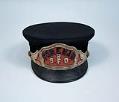
Fireman's hat, ca. 1880s
This Foreman's hat from the Seattle Fire Department is dated to the time of the Great Seattle Fire.
ID Number:1965.3520.15
Date:Circa 1880
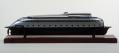
Full model of ferry boat Kalakala made by Mr. Lou Proctor, ca. 1930s
The builder's model was made by Lou Proctor in 1933 while temporarily laid off from the Boeing Company's model shop. This model was used in lieu of drawings; lines were lifted directly from the model for construction of the stylish streamlined superstructure. The Kalakala, in operation on Puget Sound from 1935-1967, was designed and built to be fast, to look…
ID Number:1965.3540.8
Date:Circa 1930-1940

Painting of Mt. Index, by Eustace Ziegler, ca. 1934, with unfinished painting of Mt. McKinley and packhorses on verso
By the beginning of Great Depression, Eustace Ziegler (1881-1969) was an established and successful artist. In 1933, the US government launched an ambitious program of cultural aid including direct aid for artist hard hit by the depression. Ziegler had long advocated government funding for the arts and, in a show of support for the program, he donated this painting to…
ID Number:1966.3848.1
Date:1934
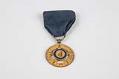
Medal from the Disabled American Veterans, 1921
The Disabled American Veterans (DAV) organization was created in 1920 in the wake of the first World War. Over 200,000 members of the U.S. Armed Forces had been wounded during the war, including becoming blind, deaf, or mentally ill (referred to as “shell shock” at the time). Little government support was available at the time, so DAV aimed to support…
ID Number:1980.7023.7
Date:1921
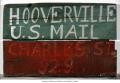
Post Office sign from Hooverville in Seattle, ca. 1930
During the hard times of the late 1920s and 1930s, many unemployed and homeless people settled just west of where Seattle's stadiums now stand. The men, and several women, built ramshackle houses out of scrap material, set up a post office, and elected their own mayor. The area was nicknamed "Hooverville" by people who blamed President Herbert Hoover for causing…
ID Number:1980.7029.1
Date:Circa 1930
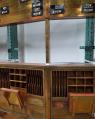
New York Stock Exchange booth, 1929
This three-part booth was Stock Exchange Tradiing Post #4 on the floor of the New York Stock Echange from 1929 to 1932 during the stock market crash and subsequent Depression. Pneumatic tube stations connected all 13 posts which served to process the increasing volume of trades. Washington state companies listed on Post #4 included Boeing, Weyerhauser, Puget Sound Power &…
ID Number:1981.7352.1
Date:1929
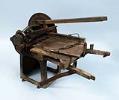
Rubber band making machine, ca. 1930s
During the Depression, Clarence Gowey worked for the Seattle Rubber Band Company located in the basement of the Ankeny-Gowey house on Queen Anne Hill before becoming a pipe fitter. He purchased this machine and, according to one of his grandchildren, Gowey and his children would go to the dump and recover the best inner tubes from car tires. They used…
ID Number:1982.15.1
Date:Circa 1930
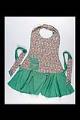
Homemade sleeveless cotton apron, ca. 1930s
This homemade 1930s apron was likely made from scraps of garments that were too worn or out-of-style to wear. Reuse of clothing fabric was common in the 19th and early 20th centuries, and particularly so during the Great Depression in the 1930s. This apron was from the household of Calista May Sterns Olsen (1904-1994) and Albert C. J. Olsen (1895-1983)…
ID Number:1993.30.23.c
Date:Circa 1930