58 results for: Civil Rights
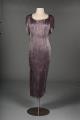
Mariano Fortuny lavender silk gown, ca. 1920s
Mariano Fortuny and his wife Henriette first created finely pleated “Delphos” gowns in 1907. It was an unabashedly modernist look because the dress could be worn without a corset. The design was so forward thinking that Fortuny was able to produce and sell versions of the gown until his death in 1949.This dress belonged to Zoë Dusanne, Seattle's first professional…
ID Number:1963.3001.1C972
Date:Circa 1920

Gavel presented to the "Seattle Council of Minute Women," 1923
The Washington Woman's Work Committee of the State Council was dubbed the "Minute Women" because "they, like the men of old, were to be ready at a minute's notice to carry messages for the government." This gavel, made from the wood of the oak and elm trees in Belleau Wood, France, and from artillery shells left after the WWI battle…
ID Number:1967.4109.34
Date:1923
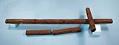
Cross that was placed in the front yard of a Bothell home, 1991
This eight foot cross, made from cherry wood fence timber, was built by a young adult Bothell resident in protest of a Black family living in the neighborhood in 1991. Several young men helped place the cross in the front yard of the family and the base was set on fire. When a member of the family flashed the porch…
ID Number:1996.44.1
Date:1991

Poster and yellow caution tape from the World Trade Organization (WTO) protest, "Peaceful Protest Zone," 1999
This sign was carried at the WTO protests in Seattle in 1999. Officials from the WTO’s 135 member nations met to plan negotiations to further deregulate free trade. Tens of thousands of people protested over concerns that WTO was favoring corporate interest over social and environmental issues.
ID Number:1999.75.1
Date:1999
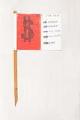
WTO protest sign, "Not For Sale: Animals, Women, Our Food, Our Bodies, Life," 1999
This homemade sign was carried during the World Trade Organization (WTO) protests in Seattle in 1999. Tens of thousands of activists for many causes gathered to protest what they saw as the WTO's favoring of corporate interests over social and environmental concerns. Heavy police response included the use of riot gear, tear gas, and rubber bullets. The back side of…
ID Number:2001.46.2
Date:1999
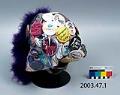
Seattle Raging Grannies hat with activist buttons, ca. 1995
The Raging Grannies are an activist group made up of women old enough to be grandmothers. They advocate for environmental issues, peace, and social and economic justice. At protests, they dress up in clothes that play into and mock stereotypes of older women; such as colorful dresses, large hats, sweaters, and aprons. They also sing songs, using their own lyrics…
ID Number:2003.47.1
Date:Circa 1980-1990
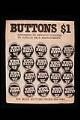
Button display for 1978 campaign, "No on I-13"
In 1973, the City of Seattle adopted a fair employment ordinance which specifically prohibited discrimination against gay people in the workplace, followed by a fair housing ordinance in 1975. Initiative 13 was a 1978 attempt to repeal these ordinances and to dissolve the City of Seattle's Office of Women's Rights. Citizens to Retain Fair Employment (CRFE) sold pins in Seattle…
ID Number:2005.21.1
Date:1978
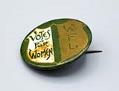
Pin, "Votes for Women W.F.L.", ca. 1907
The initials W.F.L. refers to the Women's Freedom League established in the United Kingdom in 1907. This organization inspired the citizens of Washington to enact women's suffrage for their state in 1910. The Washington law, however, allowed only those who could read and speak English to vote. Many women, includingimmigrant Asians and Native Americans, who were subject to other restrictive…
ID Number:2007.1.1
Date:Circa 1907
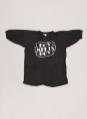
T-Shirt, "Boy Meets Boy," ca. 1990s
This shirt belonged to Ric Weiland (1953-2006), pioneering programmer for Microsoft and prominent advocate for gay rights. Weiland was a Lakeside classmate of Paul Allen and Bill Gates and in 1975 became the first lead programmer for Microsoft. He retired in 1988 at age 35. As the value of his stock holdings grew, Weiland increasingly devoted himself to philanthropy, donating…
ID Number:2007.9.20
Date:1990-1999
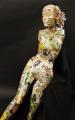
Mannequin, "The WomanCan," used in lectures by Georgie Bright Kunkel, ca. 1970
Activist Georgie Bright Kunkel (1920-2025) renamed this mannequin the "WomanCan,” covering her in a collage of sexist and nonsexist images she found in magazines. In the 1970s, she carted the "WomanCan" around the state, talking to groups about equal rights. "My mother never talked about getting married, never talked to us about getting a man. ‘You have to be independent.…
ID Number:2007.62.1
Date:Circa 1970