MOHAI’s latest display, Riding Together: 135 Years of Cycling in Seattle, celebrates the city’s deep connection to bicycles and the people who ride them. While the display highlights many key moments in local cycling history, there are even more fascinating bicycle accessories in the MOHAI Collection.

From 1890s women’s bloomers and straw hats to handmade bike polo mallets and Bill Nye’s Seattle to Portland bag, these artifacts showcase how style, innovation, and community have shaped Seattle’s cycling culture.
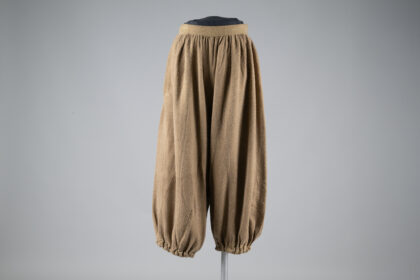
Woman's bicycling bloomers, 1890s

A tan colored pair of women's bicycling bloomers.

MOHAI, 1959.1803.20 C-152

Riding Together features a women’s bicycling suit from the 1890s that consists of a matching jacket and skirt. Extra volume at the back of the skirt could be pulled through the legs to create a kind of split-skirt while riding. However, the more daring choice for women during that time was bloomers. These would have reached just below the knee and been worn with tall socks and boots. Bicycling was wildly popular in the 1880s and 1890s and was considered particularly liberating for women because of the mobility and independence it offered.

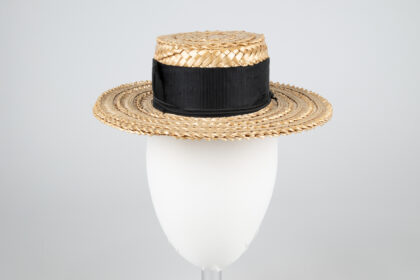
Woman's straw boater, ca. 1895

A woven straw hat with a flat brim and black ribbon tied around the base.

MOHAI, 1959.1803.21 M-213

The bloomers above were donated with an essential cycling accessory: a straw boater. In the 19th century, this style of straw hat was worn by both men and women for sporting activities and informal events in warm weather. The material was light and allowed for airflow, and larger versions helped shade the eyes. However, this smaller hat likely would not have provided much shade and would have sat atop an upswept pompadour hairstyle. At the time, wearing a hat when you were outside was required by social norms. A hat didn’t need to function—it just needed to complete an outfit.

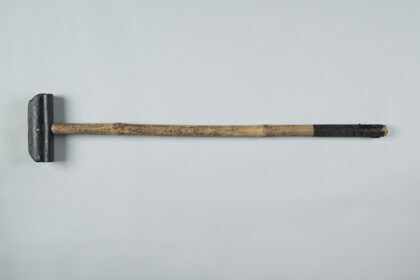
Bamboo mallet used by Bryce Weaver for bike polo in Seattle, ca. 1999-2000

A mallet made of bamboo and metal used to play cycle polo.

Bamboo mallet used by Bryce Weaver for bike polo in Seattle, ca. 1999-2000
MOHAI, 2013.122.1

The late-19th century craze for bicycling led to many creative new uses for the device, including bicycle polo which was invented in Ireland in 1891. Bicycle polo (also called cycle polo or bike polo) is similar to traditional polo except that bicycles are used instead of horses. At first it was played on grass, but the sport experienced a resurgence in the late 20th and early 21st century when it was modified for a hardcourt. Instead of using standard-issue mallets, hardcourt bike polo players typically begin by making their own handmade versions. This polo mallet is made from tan vong, a bamboo species from Vietnam.

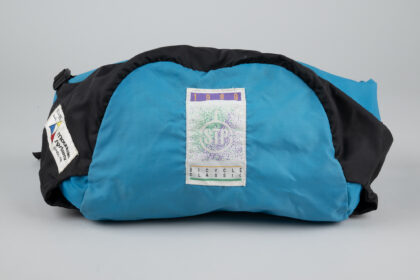
Bill Nye's bag from the Seattle to Portland Bicycle Classic, 1989

Teal-colored fanny pack with a logo that reads "1989 bicycle classic."

Bill Nye’s bag from the Seattle to Portland Bicycle Classic, 1989
MOHAI, 2024.39.Ref08

Riding Together features a collection of patches from the Seattle to Portland Bicycle Classic (STP) on loan from the Cascade Bicycle Club. The STP started in 1979 as a bicycle race but became a recreational ride in 1981. MOHAI also has a cycling bag from the 1989 STP which belonged to Bill Nye “The Science Guy.” Nye is an avid bicyclist and participated in the STP several times when he lived in Seattle.

Categories:
Hobbies, Sports

Related Blog Posts

Bill Nye's jersey, cap, towel, and badge from 12th man flag raising, Nov. 19, 2023
February 5, 2026

Bill Nye, the Ultimate Frisbee Guy: Seattle’s Science Star and His Love of the Game

Long before he became “The Science Guy,” Bill Nye was known around Seattle for something entirely different—his skills on the…
Read More
Black and white photograph of Lenny Wilkens coaching a Seattle SuperSonics game in December 1982.
November 11, 2025

Remembering Lenny Wilkens

MOHAI remembers the life and legacy of Lenny Wilkens, who passed away on Sunday at the age of 88. A…
Read More