
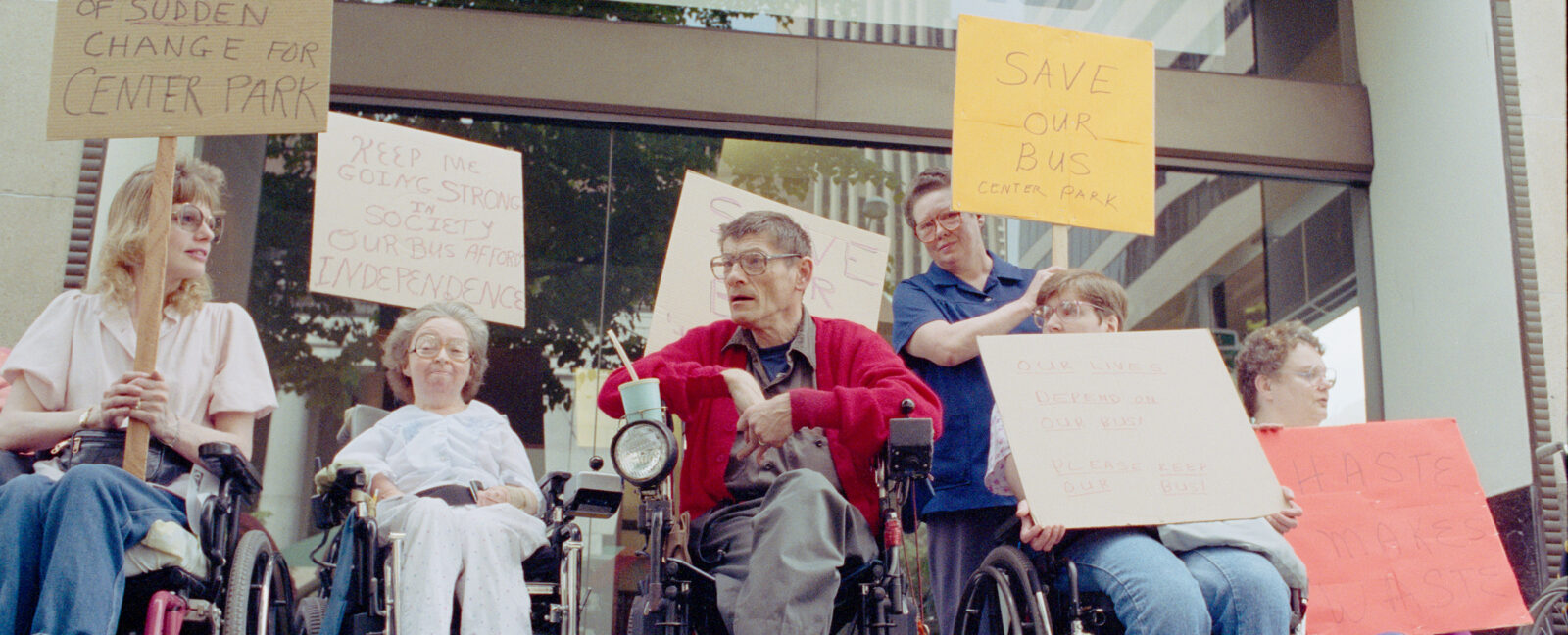
One in four Americans have a disability, yet the history of disability activism is often underrepresented. The Seattle Department of Neighborhoods Historic Preservation program is creating a first-of-its-kind historic context study about disability activism. Come and learn from community members as they reflect on their experiences in the continued fight for disability rights.
ASL Interpretation and CART captioning are available during the program. In addition, a limited number of Assistive Listening Devices are available upon request. For more accessibility support, contact programs@mohai.org two weeks before the program.
Event Summary
This event aimed to shed light on the often-overlooked history of disability activism within Seattle, emphasizing the importance of community agency in driving change. Notable speakers included Michael de Lange, a neurodivergent historian, alongside a diverse panel of disability advocates.
Key themes emerged from the conversation, including the historical neglect of disability history in preservation efforts. De Lange highlighted that there had been no recognized landmarks related to disability activism despite over 400 existing landmarks in Seattle. This reflects broader societal trends where disability issues are often marginalized. He quoted, “We know that disability history has often been overlooked,” illustrating the need for inclusive narratives.
Panelists, such as Elizabeth Ralston and Carol Rozumalski, shared personal experiences of internalized ableism and the importance of community support. Ralston remarked on her transition from merely fitting in to becoming an advocate, emphasizing the significance of storytelling in fostering understanding about disability. Rozumalski spoke about the continuous journey of activism, illustrating how advocacy is interwoven with everyday life and relationships.
The discussion also presented suggestions for improving cross-disability organizing and integrating accessibility into various sectors. Ralston emphasized that “nothing about us without us” should be a guiding principle, advocating for authentic representation in decision-making processes.
In reflection, the collected discourse highlights the ongoing relevance of disability activism, especially amid rising societal discussions about inclusivity and equity. As communities strive for better accessibility and representation, the lessons from Seattle’s disability rights movement serve as a critical framework for fostering a more inclusive society moving forward.