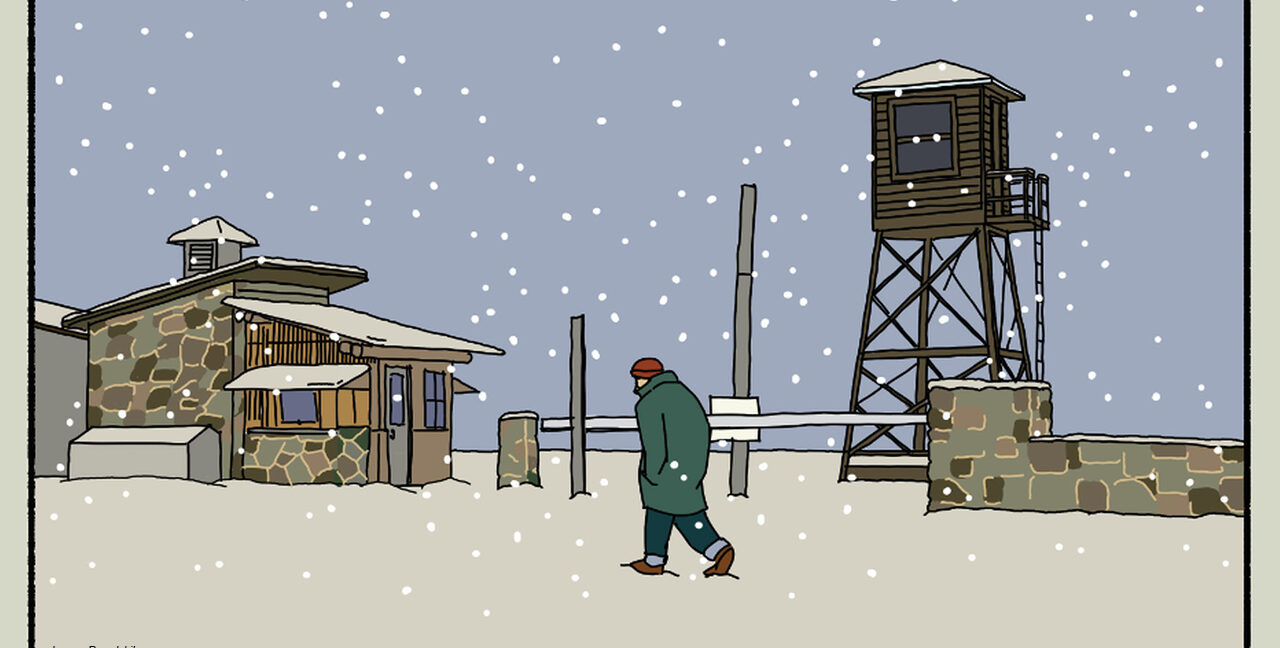
Comics might seem like a modern invention, but visual storytelling has existed longer than the written word in forms ranging from cave paintings to tapestries to masks. Join local historians and comic makers for a discussion about the long history of sequential art, how we define comics, and how the medium can transform the way we tell and interpret history. Panelists include author Tamiko Nimura, Fantagraphics Editor Kristy Valenti, and Fantagraphics Co-Founder Gary Groth.
History Café is produced as a partnership between HistoryLink and MOHAI. Join us on the third Wednesday of the month for a discussion about local history—both popular and obscure.
ASL Interpretation and CART captioning is available during the program through generous support of the Institute for Museum and Library Services. For additional accessibility support, please contact programs@mohai.org.
Event Summary
On the third Wednesday of each month, MOHAI’s History Cafe, in collaboration with History Link, hosts engaging discussions that delve into various historical themes. This latest session, moderated by Kiku Hughes, focused on the multifaceted world of comics and sequential art as powerful storytelling mediums. Notable panelists included Gary Groth, Tamiko Nimura, and Kristy Valenti, each contributing unique perspectives on the intersection of comics and history.
The conversation began with a foundational definition of comics, emphasizing the significance of sequential images and their ability to convey complex narratives. Kristy Valenti articulated that comics consist of “sequential images that need to be read together to generate their full meaning,” distinguishing them from traditional illustrations, which often support text. Groth further highlighted how the perception of comics has evolved; once considered sub-literate, comics have emerged as a bona fide art form capable of serious artistic expression. He noted, “What I’ve watched…is the growth of comics as a bonafide art form.”
A compelling aspect of the discussion centered on comics’ role in documenting history. Tamiko Nimura showcased her graphic novel, We Hereby Refuse, which recounts the experiences of Japanese Americans during World War II. She underscored how visual narratives can capture emotions and experiences that traditional text may overlook, stating, “There’s a certain amount of intimacy that’s involved…that you don’t necessarily get from a history textbook.”
This dialogue is particularly pertinent given the ongoing debates about representation in educational materials. As comics increasingly serve as educational tools, they present diverse perspectives and narratives that challenge conventional histories. The rise of digital platforms has democratized storytelling, allowing a broader range of voices to emerge. As Valenti noted, “Comics tell a history of their own…and the juxtaposition of meaning with sequential images and words is crucial.”
In conclusion, the insights shared during the session illuminate the vital connection between comics and historical narratives, reflecting an ongoing evolution in how stories are told and understood in contemporary society.