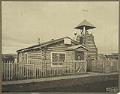
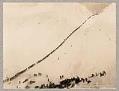
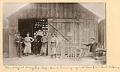
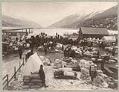
The Chilkat are a Tlingit tribe who have lived in and around their village of Klukwan on the Chilkat River, in southeastern Alaska since time immemorial. They lived on foods available on their lands as well as trading with other tribes on the Pacific coast and inland. Settlers came to Chilkat lands in large numbers in the early 20th century, and they dispossessed the Chilkat of most of their land. US authorities attempted to suppress Chilkat culture by prohibiting potlatches and other traditional customs. However, their efforts failed and the Chilkat people maintained many of their traditions. Today most Chilkat people live in Klukwan.
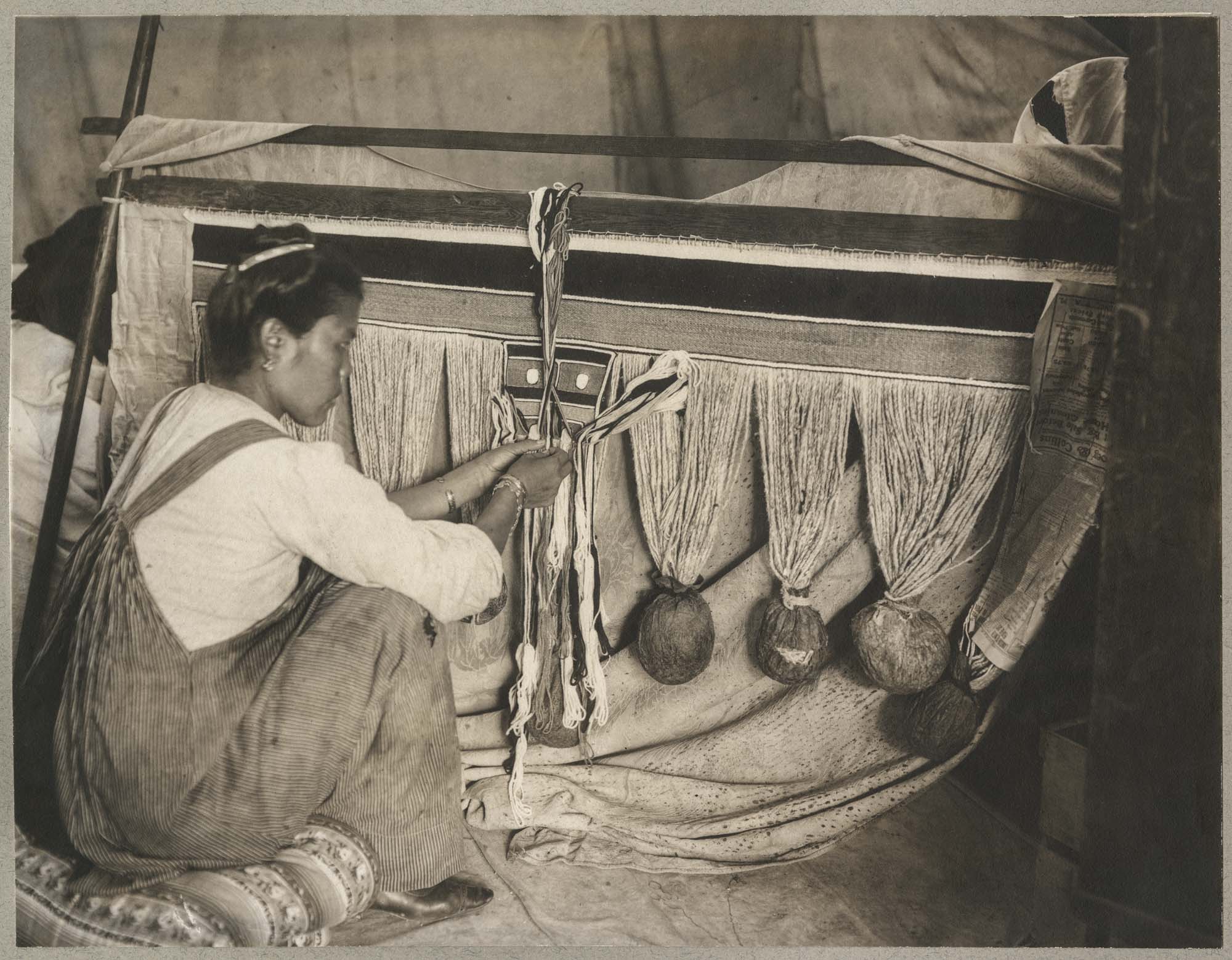
In this photograph, a woman works on a Chilkat ceremonial dance blanket using a frame loom. Chilkat blankets are elaborate ceremonial blankets made by the Tlingit as well as neighboring peoples. They feature abstracted images of animals and are traditionally worn during important events. The warp threads, made from cedar bark covered with mountain goat wool, hang in bundles from the top bar. The weaver has completed the border on three sides and is beginning to weave the design in the center. She has carefully placed newspapers over the edges of her blanket to protect the finished portion. A closer look at the image reveals that the newspapers originated in California and are dated January 12, 1904. Traditionally, men created the designs and painted them on boards which the women used as patterns for their weaving.
Caption information source: "History," Chilkat Indian Village, retrieved from https://chilkat-nsn.gov/history/ Caption information source: "Unpacking a phrase: The Chilkat blanket," by Christy Christodoulides, Burke Museum, retrieved from https://www.burkemuseum.org/news/unpacking-phrase-chilkat-blanket