The Tlingit people have lived on the coast and islands of what is now southeastern Alaska since time immemorial. Tlingit society is organized into clans, which follow maternal descent. Fishing, gathering, and hunting were central to historic Tlingit lifeways - they used salmon, shellfish, seals, berries, deer, and other food sources. They used every part for different purposes, not wasting anything. The Tlingit also had many uses for cedar trees, from houses to totems, canoes, and baskets. Canoes were one of the main modes of transport for the Tlingit and enabled them to travel and trade not only amongst each other but also with neighboring peoples north and south along the Pacific coast.
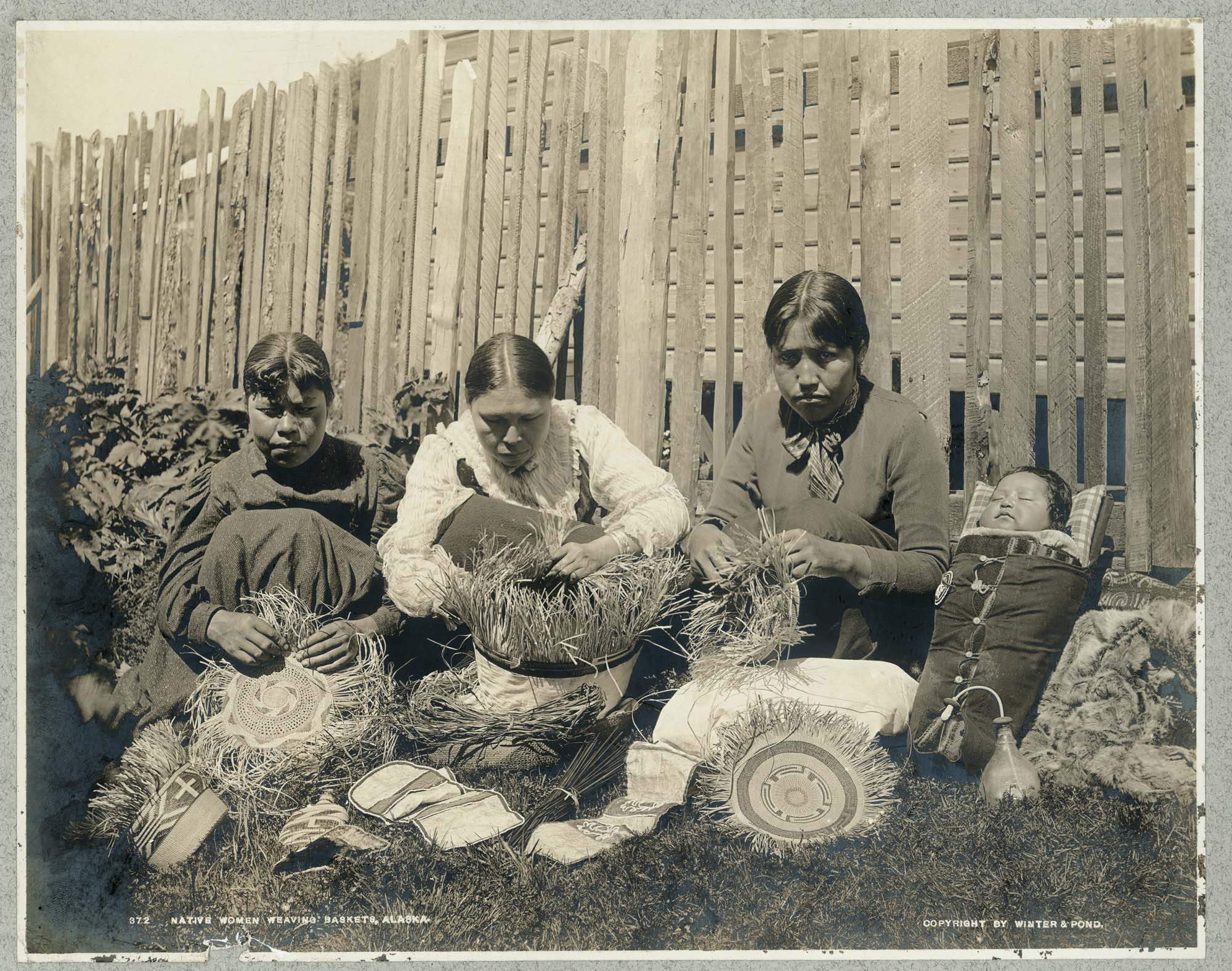
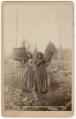
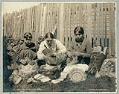
Tlingit women made finely-woven baskets for the tourist trade and marketed them in towns served by steamship lines. In this photo, three weavers work on baskets using spruce root and grasses, and decorated in a technique known as "false embroidery." False embroidery involves using dyed grass stems wrapped around the weft so the pattern shows only on the outside of the basket. Beaded pouches, a basketry-covered flask, and a few other items are laid out on the grass in front of the women. A baby sleeps beside its mother, wrapped tightly in its cradleboard, and a glass baby bottle with a long-necked nipple sits at the cradleboard's foot.
Caption on image: Native women weaving baskets, Alaska. Copyright by Winter & Pond.
Caption information source: "Our History," Central Council Tlingit and Haida Indian Tribes of Alaska, retrieved from http://www.ccthita.org/about/history/index.html