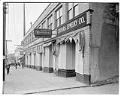
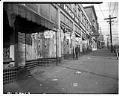
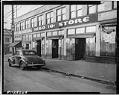
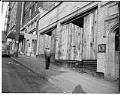
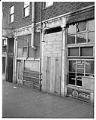
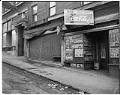
The exclusion of Seattle's Japanese families by the federal government during World War II changed the city in numerous ways. Among the more obvious signs were the shuttered and boarded up Japanese businesses along Main, Jackson and upper King Streets. Many of the families who managed or worked in the stores and shops never returned to the city after they left the incarceration camps.
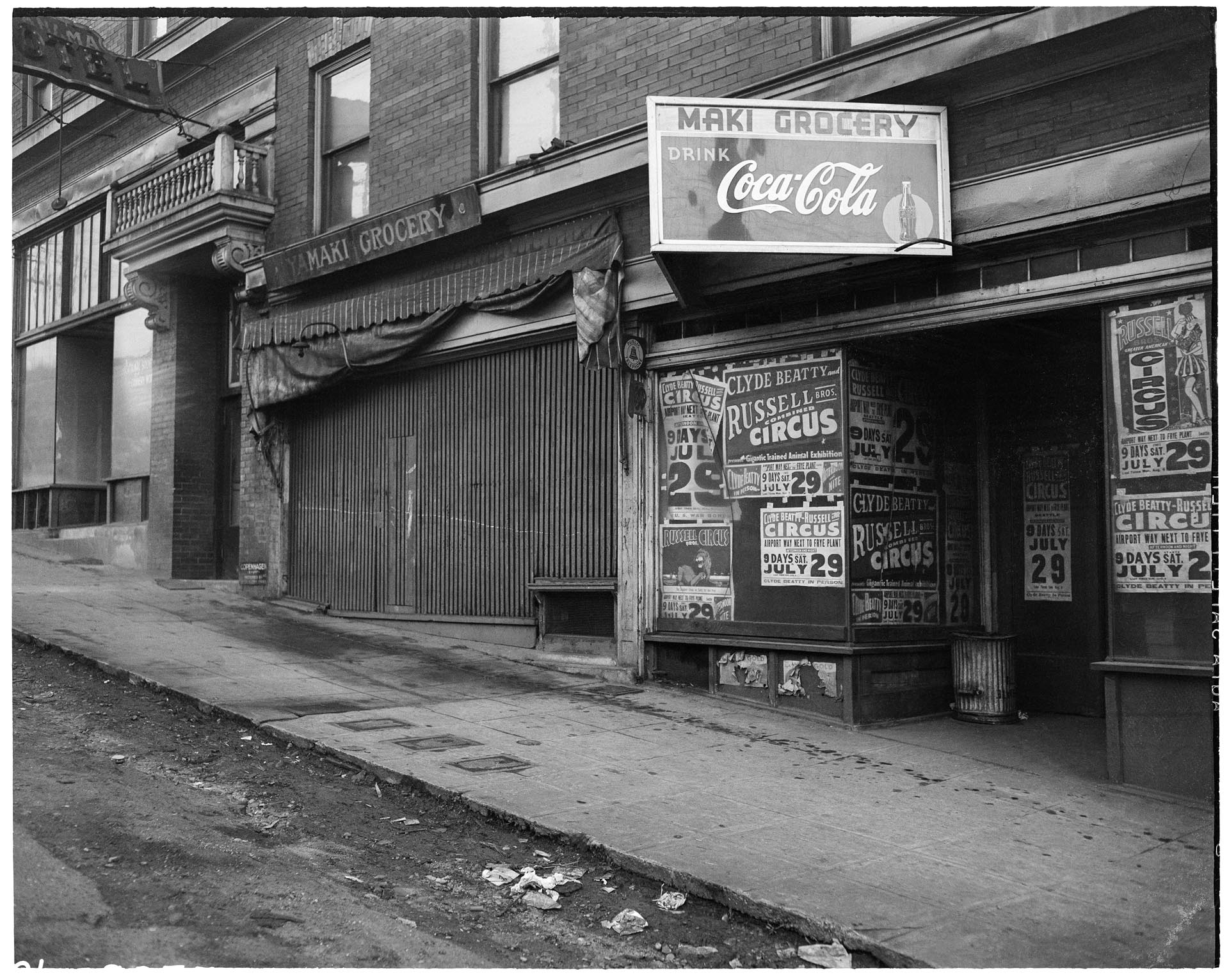
This image shows an area of S. Main Street just east of 6th Avenue S. At right is a boarded up Japanese-owned grocery store, Maki Grocery, located at 605 Main Street. The store was owned by Kiyoichi Maki.
The sign for the Panama Hotel is visible in the upper left corner. The Panama Hotel was designed by a Japanese American architect and opened in 1910. It was a residential hotel and included businesses such as a dentist, laundry, and tailor. It also had a Japanese public bathhouse. Because of these facilities, the Panama was a center of Seattle’s Japanese American community. Many immigrants lived in the Panama and its public bath especially was a gathering place and a way to participate in cultural traditions. Many Japanese American residents of the Panama packed their belongings into trunks and stored them in the hotel’s basement when they were forcibly removed during World War II. Many of the residents never returned to reclaim their possessions. Currently, the Panama Hotel hosts a small museum which recreates the hotel and the bathhouse as they existed before the war.
Signs in image: Maki Grocery; Panama Hotel
Caption information source: “The Panama Hotel opens in Seattle’s Japantown in the summer of 1910,” by Colleen E. O’Connor, HistoryLink essay #9544, retrieved from https://historylink.org/File/9544.
ID Number: PI28075
Date: 1942
Physical Description: 1 safety negative : b&w ; 4 x 5 in.