The United States' entry into World War II in December 1941 created labor shortages as many men left civilian jobs to join the military. On the West Coast, the shortage was exacerbated by the forced removal of Japanese Americans, many of whom were farmers.
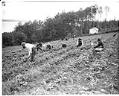
In the summer of 1943, the Vashon Island Packing Company hired 80 First Nations people from British Columbia to weed and harvest strawberries, loganberries, and currants. The Indigenous workers replaced Filipino workers who were now growing vegetables and working in war industries. The First Nations farmworkers earned 50 to 60 cents an hour, reportedly two to three times what they might have made at home. Those who stayed the whole summer were provided housing and had their transportation to and from Canada paid for as well. Under the 18th century Jay Treaty between Britain and the United States, Indigenous people could freely cross the US-Canada border by proving their tribal status.
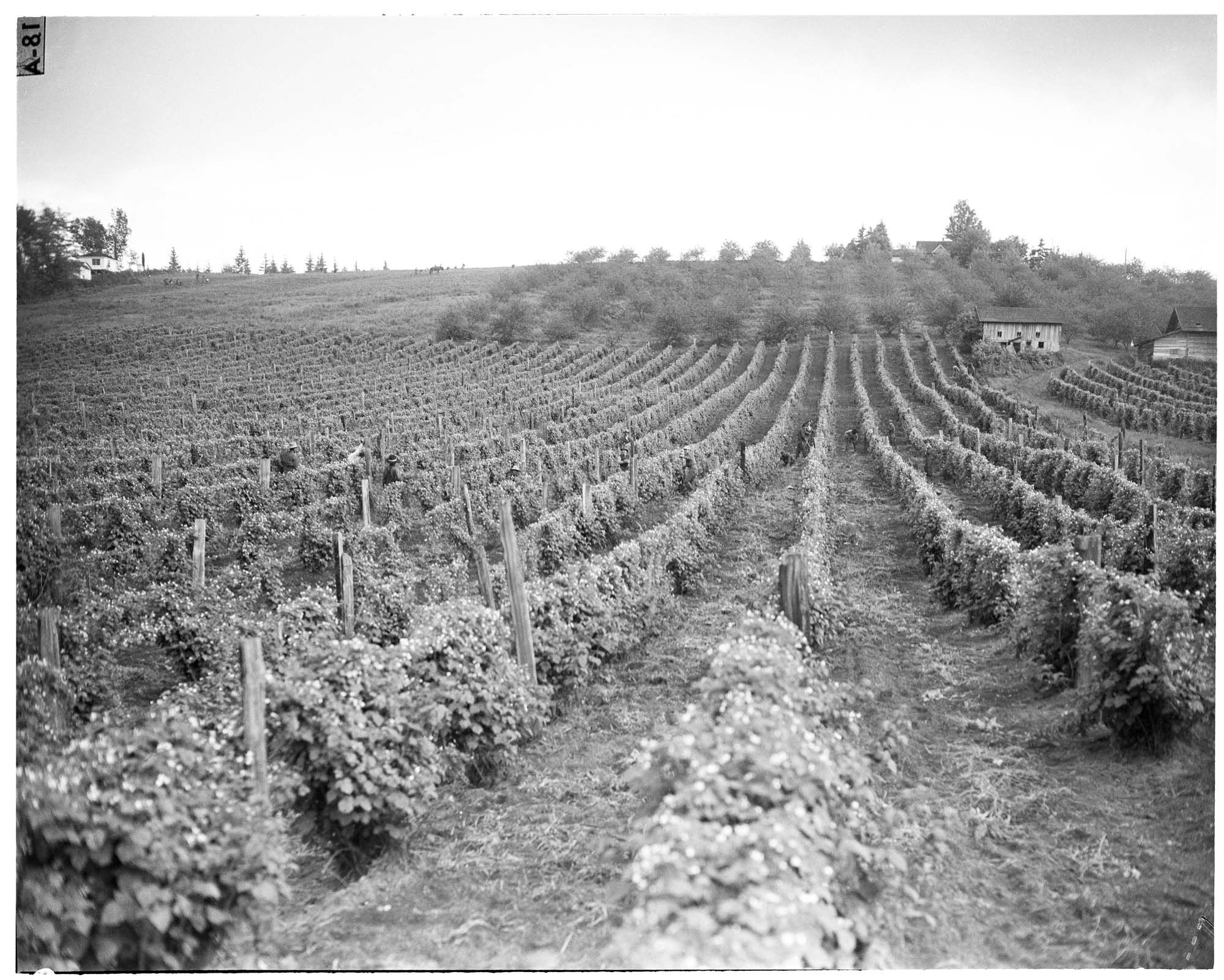
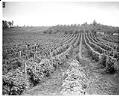
First Nations people had begun working on Bainbridge and Vashon Islands as fruit pickers in the early 1900s. Most of them were women, because men from their tribes stayed closer to home to work as loggers or dockworkers. This June 1943 photo shows flowering berry vines on Vashon Island. A group of indigenous workers can be seen in the distance.
Written on original envelope: Vashon Island, Washington-Indian berry pickers
Caption information source: “Tribesmen weed berries,” by Anne Stewart, Seattle Post-Intelligencer, June 7, 1943, Part 2, p. 11. Caption information source: Seattle from the Margins, by Megan Asaka, University of Washington Press, 2022, pages 153-156.
ID Number: PI23858
Date: 1943
Physical Description: 1 negative : b&w ; 4 x 5 in.