The Makah people of the northwest tip of the Olympic Peninsula refer to themselves as Kwih-dich-chuh-ahtx, which translates roughly to "the people who live by the rocks and seagulls." The early Makah were skilled mariners, using several types of canoes which they carved from western red cedar for various purposes - war, whaling, fishing, sealing, carrying cargo, and long voyages. Today, roughly 1400 Makah live in and around their traditional lands near Neah Bay on the Makah Indian Reservation. The carving of their skilled woodworkers can range in size from tiny masks to totems and giant, oceangoing canoes. Whaling and fishing have been central to Makah culture for thousands of years. The Makah are the only tribe to be granted whaling rights by treaty with the US government, in the Treaty of Neah Bay signed in 1855. While the Makah voluntarily suspended whale hunting in the 1920s due to the near extinction of whales from commercial whaling, they exercised their treaty right to hunt whales once in 1999 before court decisions blocked further legal hunting.
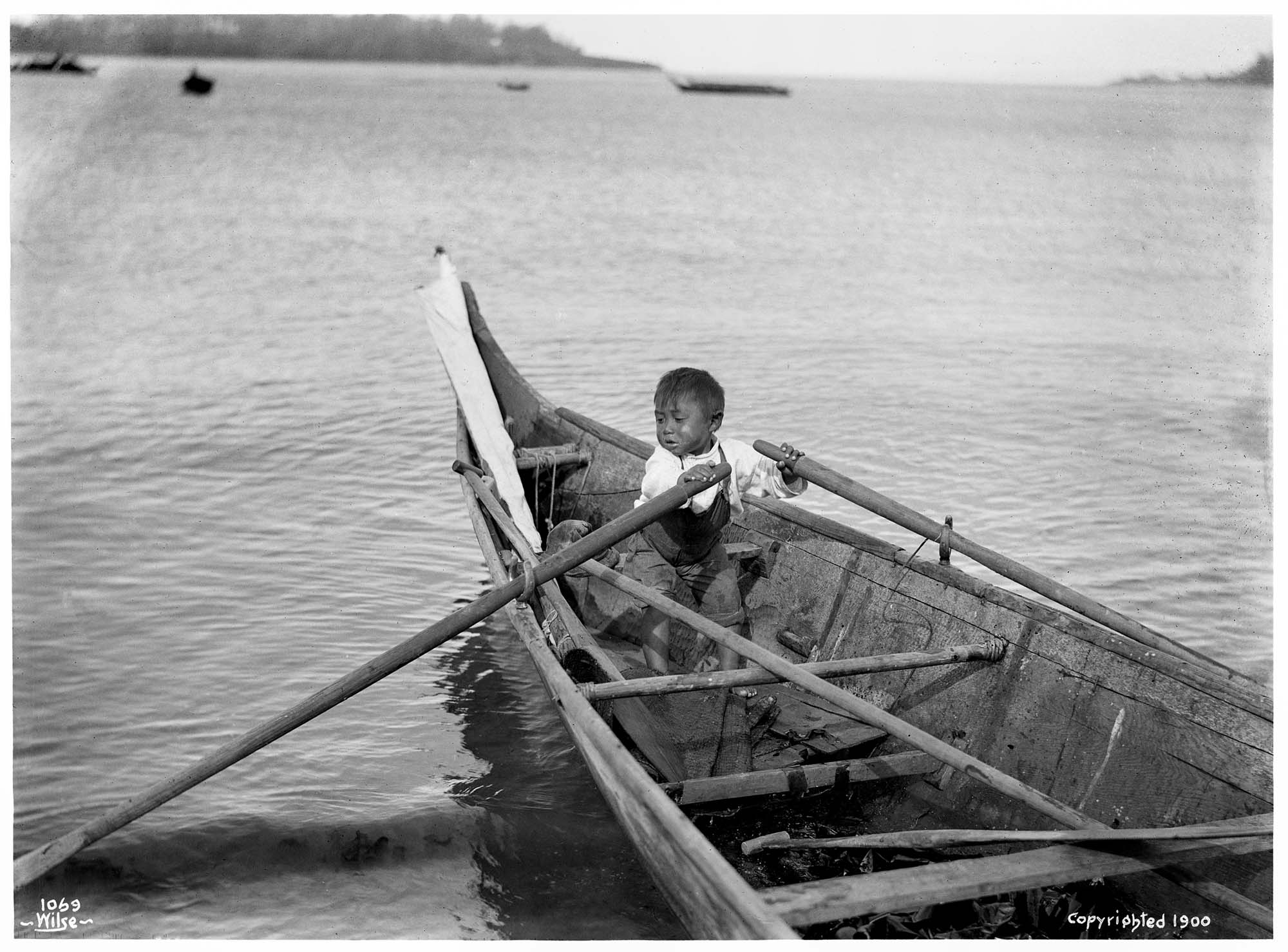
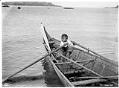
In this photo, a small Makah boy holds the oars of a large cedar canoe at Neah Bay. Makah children learned how to handle canoes at a young age. The Makah used their large canoes for long-distance travel, fishing, and for hunting whales.
Caption on image: Copyrighted 1900
Caption information source: Makah Tribe website at https://makah.com