The Tulalip Tribes are a confederation of several Coast Salish peoples including the Snohomish, Snoqualmie, Skykomish, Skagit, Suiattle, Samish, Stillaguamish, and other allied tribes and bands. In the 1855 Treaty of Point Elliott, these groups ceded most of their land to the United States and reserved the Tulalip Indian Reservation for their permanent homeland. They also reserved rights for hunting, gathering, and fishing at all usual and accustomed places. The name Tulalip comes from the Coast Salish word "dxwlilap," meaning "small-mouth bay."
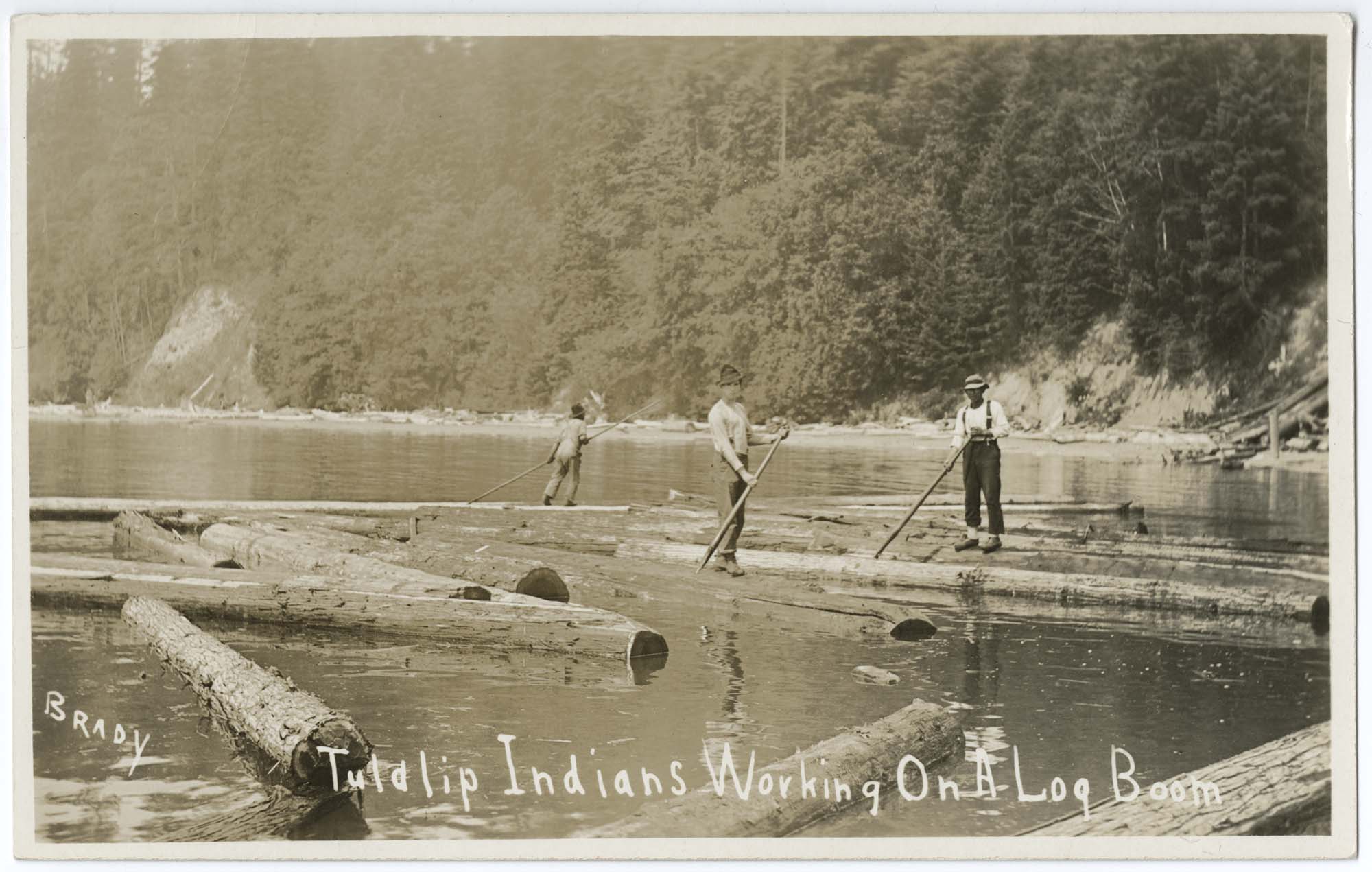
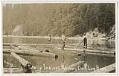
Loggers cleared most of the reservation land in the first part of the 20th century. The cut logs were hauled to the bay and floated in log booms to sawmills located throughout the area. The Tulalip Indian School also encouraged its students to become farmers, which required the clearing of forests on the reservation. Indigenous men, like the three seen here, found employment in all aspects of the lumber industry.
The photographer Ferdinand Brady had a government contract in the 1910s to photograph the people and activities around the Tulalip reservation and boarding school.
Caption on image: "Tulalip Indians working on a log boom."
Caption information source: "History," Tulalip Tribes, retrieved from https://www.tulaliptribes-nsn.gov/WhoWeAre/History. Caption information source: "Assimilation Through Education: Indian Boarding Schools in the Pacific Northwest," by Carolyn Marr, retrieved from https://content.lib.washington.edu/aipnw/marr.html.