The Tulalip Tribes are a confederation of several Coast Salish peoples including the Snohomish, Snoqualmie, Skykomish, Skagit, Suiattle, Samish, Stillaguamish, and other allied tribes and bands. In the 1855 Treaty of Point Elliott, these groups ceded most of their land to the United States and reserved the Tulalip Indian Reservation for their permanent homeland. They also reserved rights for hunting, gathering, and fishing at all usual and accustomed places. The name Tulalip comes from the Coast Salish word "dxwlilap," meaning "small-mouth bay."
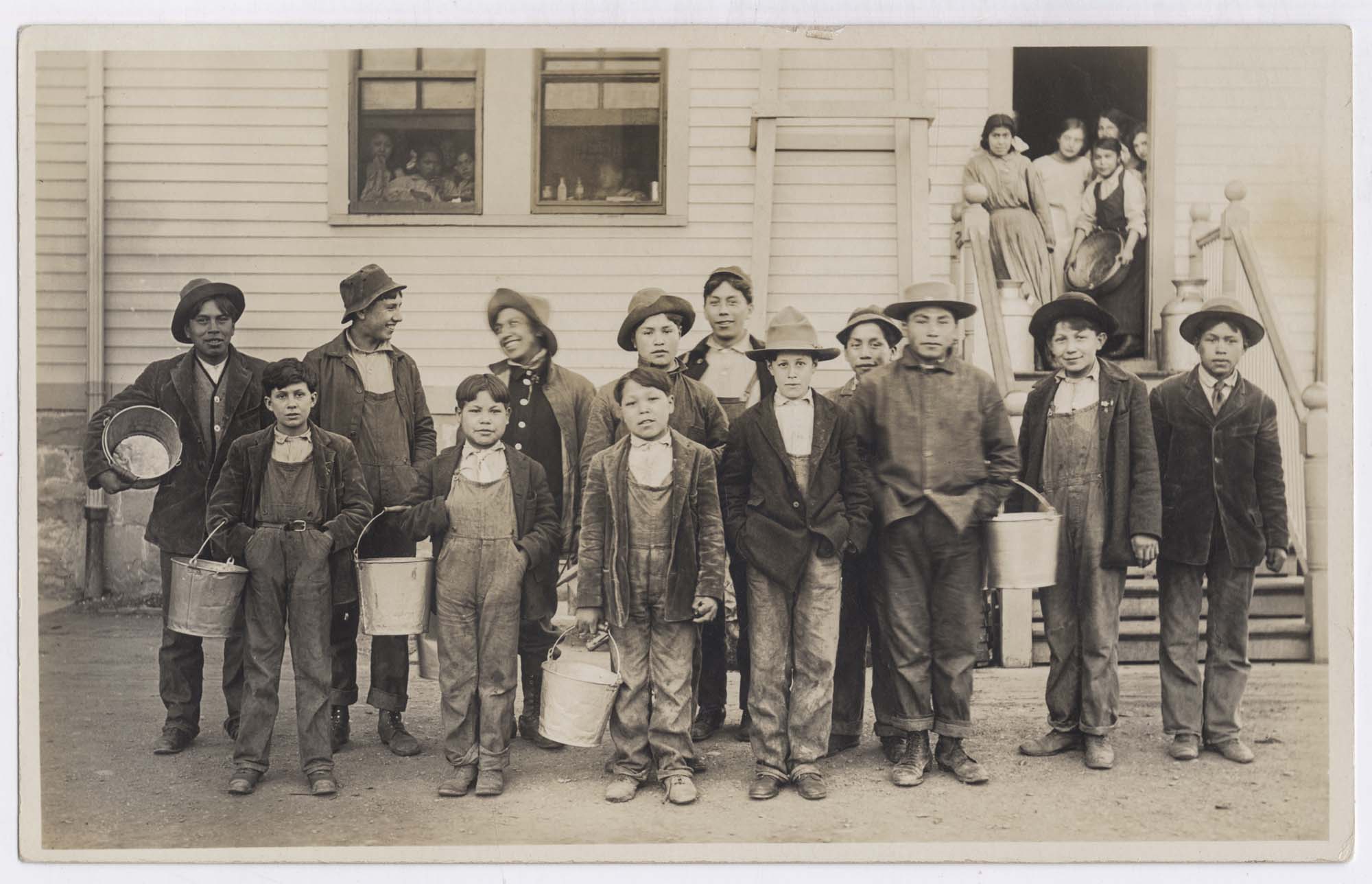
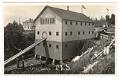
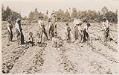
Catholic missionaries opened a boarding school on the Tulalip reservation in 1857. After a few years, the school began receiving funding from the federal government and in 1902 the government fully took over the school. That year, the original school buildings burned down, and a new school reopened in 1905. The school had a capacity of 200 students, who were as young as six. The photographer Ferdinand Brady had a government contract in the 1910s to photograph the people and activities around the Tulalip Indian School. The Tulalip school was one of many boarding schools for Indigenous children across the US. These schools were an attempt to "civilize" Indigenous peoples by forcing their children to assimilate to white-dominated Western society. One of the primary ways the schools undertook this goal was forcing students to speak English exclusively. Severe punishment, including physical punishment, was imposed when students spoke their native languages or otherwise resisted school authorities.
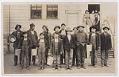
A member of the Tulalip Tribes contacted by the Museum of History and Industry identified the group in this photo as the milking brigade. Each day, the boys milked 40 to 50 cows in the dairy up the hill from the school. A published history of the Suquamish tribe, "The Eyes of Chief Seattle," identifies the group as "houseboys," implying that they cleaned and did other domestic work.
Caption information source: "History," Tulalip Tribes, retrieved from https://www.tulaliptribes-nsn.gov/WhoWeAre/History. Caption information source: "Assimilation Through Education: Indian Boarding Schools in the Pacific Northwest," by Carolyn Marr, retrieved from https://content.lib.washington.edu/aipnw/marr.html.