Back to Results
Photograph
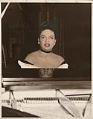
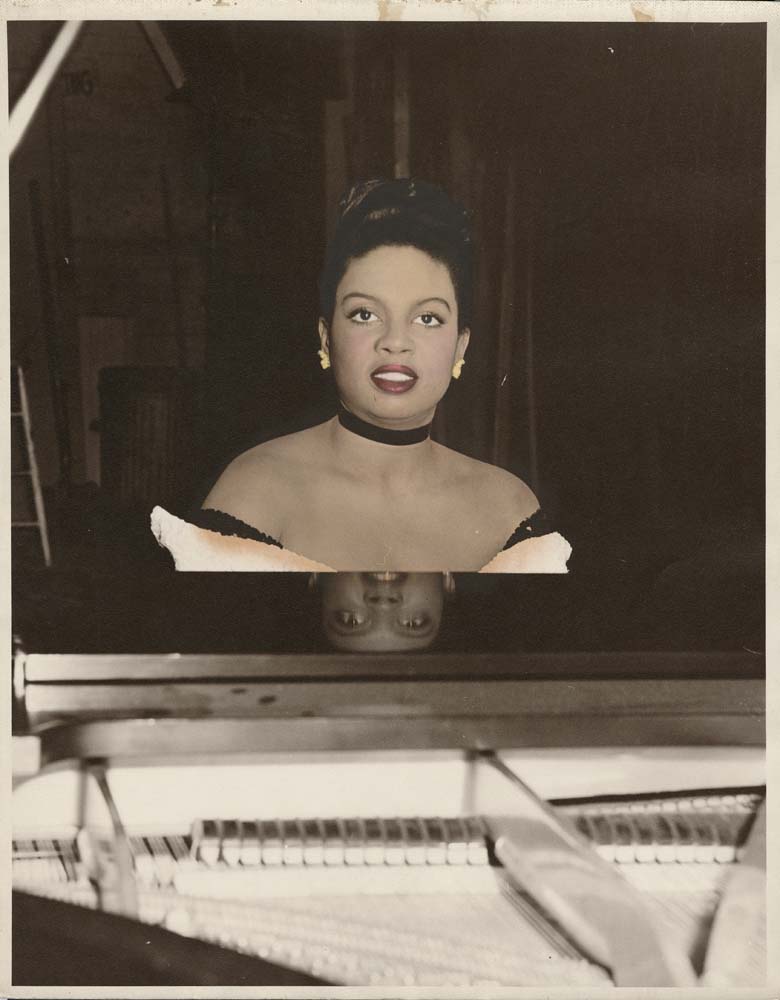
Hazel Scott at the piano, Seattle, October 11, 1947
Order an ImageHazel Scott (1920-1981), a classical and jazz pianist and singer, performed at Seattle's Civic Auditorium on October 11, 1947.
MOHAI’s 2022 Curator’s Fellow Brittney Frantece explored the photographs in the Al Smith Collection for how they demonstrate Black worldbuilding in Seattle. Looking at this photograph, Frantece offered the following analysis:
The Al Smith collection demonstrates that experimentation is key to worldbuilding because worldbuilding requires distorting and playing with normative practices. Smith seemed to be a fan of experimentation, which helps us to understand ecstatic Black representational practices because it moves away from traditional photography styles and methods.
We believe Smith practiced experimentation with hand coloring prints. There is a series of Smith’s earlier photographs, around 1940s and ‘50s where these black and white photographs are printed large scale on matte paper, and Smith colors them in by hand. The level of intimacy and imagination involved in re-remembering the past through the imagination leaves viewers in awe and curiosity. Hand-coloring prints requires patience and practice. Imagining the hair in different colors, the clothing in different colors. This practice demonstrates the imaginative process of re-telling history in a different narrative. In the hand-colored prints, the color bleeds outside of the lines. This demonstrates ecstatic practices as the artist’s creativity exceeds the space that is allotted.
In this photograph, we see Hazel Scott at the piano in Seattle’s Civic Auditorium on October 11, 1947. Scott was a well-known artist who refused to play for segregated audiences, which helped usher in Black rights, human and civil, as it relates to the Black music scene in Seattle during the ‘40s and ‘50s. By coloring prints, the artist pays homage and honor to Scott through this creative and intimate process.
MOHAI’s 2022 Curator’s Fellow Brittney Frantece explored the photographs in the Al Smith Collection for how they demonstrate Black worldbuilding in Seattle. Looking at this photograph, Frantece offered the following analysis:
The Al Smith collection demonstrates that experimentation is key to worldbuilding because worldbuilding requires distorting and playing with normative practices. Smith seemed to be a fan of experimentation, which helps us to understand ecstatic Black representational practices because it moves away from traditional photography styles and methods.
We believe Smith practiced experimentation with hand coloring prints. There is a series of Smith’s earlier photographs, around 1940s and ‘50s where these black and white photographs are printed large scale on matte paper, and Smith colors them in by hand. The level of intimacy and imagination involved in re-remembering the past through the imagination leaves viewers in awe and curiosity. Hand-coloring prints requires patience and practice. Imagining the hair in different colors, the clothing in different colors. This practice demonstrates the imaginative process of re-telling history in a different narrative. In the hand-colored prints, the color bleeds outside of the lines. This demonstrates ecstatic practices as the artist’s creativity exceeds the space that is allotted.
In this photograph, we see Hazel Scott at the piano in Seattle’s Civic Auditorium on October 11, 1947. Scott was a well-known artist who refused to play for segregated audiences, which helped usher in Black rights, human and civil, as it relates to the Black music scene in Seattle during the ‘40s and ‘50s. By coloring prints, the artist pays homage and honor to Scott through this creative and intimate process.

ID Number: 2014.49.36.01.01
Date: 1947
Creator(s):
Smith, Albert J., Sr., Photographer
Physical Description: 1 photographic print : hand colored ; 11 x 14 in.
Credit: MOHAI, Al Smith Collection, 2014.49.36.01.01
Copyright: All Rights Reserved