In 1989, the Columbia River Inter-Tribal Fish Commission (CRITFC) and the Environmental Protection Agency (EPA) began studying health risks for four Indigenous tribes living in the Columbia River basin - the Yakama Nation in Washington, the Nez Perce Tribe in Idaho, the Confederated Tribes of the Umatilla Indian Reservation in Oregon, and the Confederated Tribes of the Warm Springs in Oregon. They released their findings in 2002, and found that members of these tribes suffered much higher risk of cancer and other diseases than average, due to the presence of pollutants in the river and the tribes' fish-heavy diet. Researchers found 92 different pollutants in the water and the fish they studied, including pesticides, metals, and chemicals used in chlorination processes. Federal and state agencies recommended that tribal members reduce fish consumption, but the CRITFC and many tribal members said that fish, especially salmon, were sacred and essential parts of their cultures. They insisted that the solution was to clean up the river, not to stop eating fish.
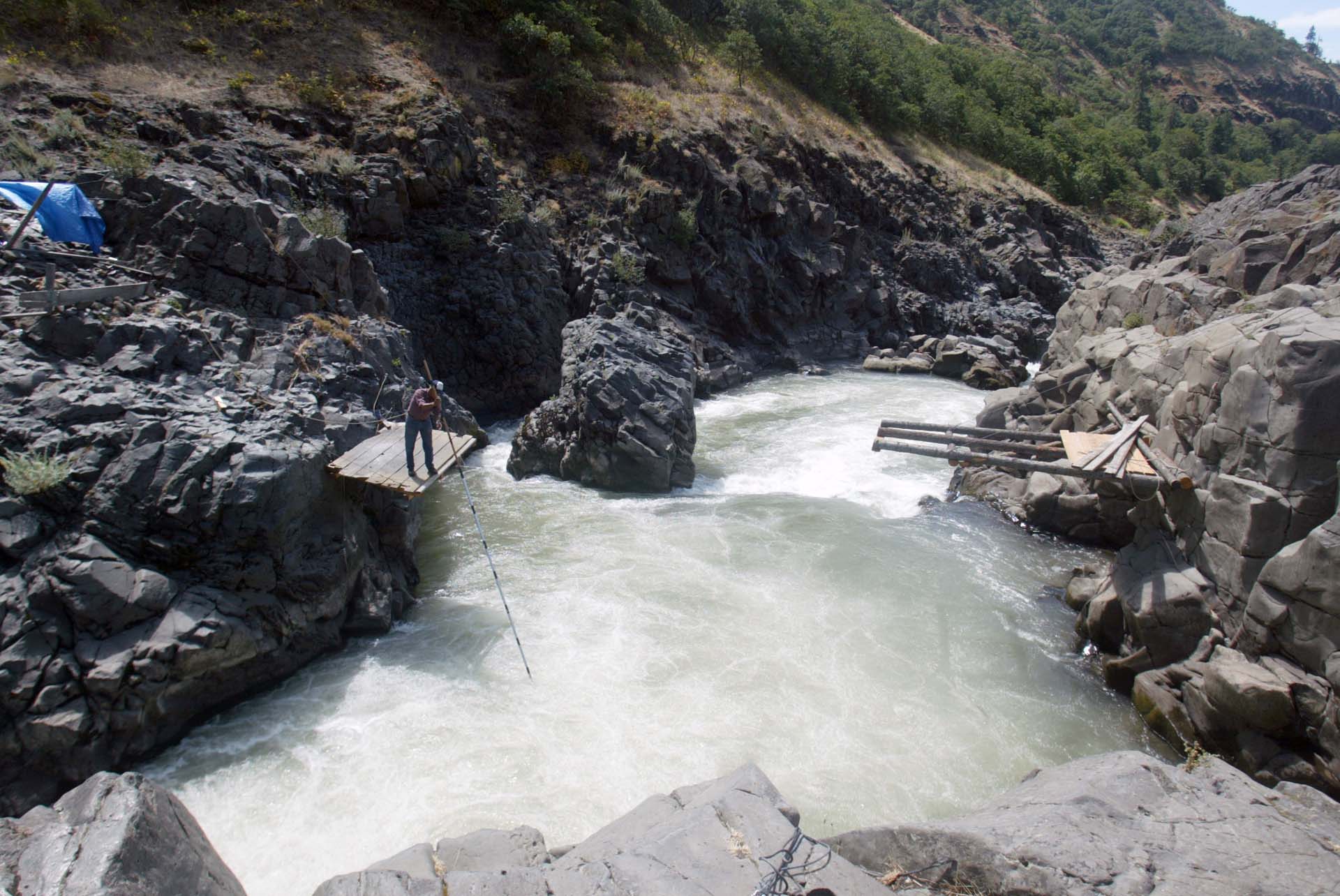
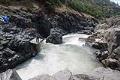
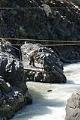
This image shows Leonard Dave, Sr. using a hoop net on the end of a 32-foot pole, the traditional method to "dip" for fish. Dave is standing on a fishing platform over the river's edge. Fishing platforms like these have been used by many Indigenous groups in the Columbia Basin and are built to give access to specific favorable fishing spots. The platforms are owned by individual families, and Indigenous fishers using them are likely standing in the same spots as their ancestors. This photograph was taken by the Seattle Post-Intelligencer for an article about the CRITFC and EPA study.
Caption information source: "Toxic fish imperils tribes - EPA study finds pollutants in diet threaten 4 groups in the Columbia basin," by Lisa Stiffler, Seattle Post-Intelligencer, July 31, 2002, page A1. Caption information source: "Fishing Techniques," Columbia River Inter-Tribal Fish Commission, retrieved from https://critfc.org/salmon-culture/tribal-salmon-culture/fishing-techniques/.