In the early 1990s, refugees arriving in Washington were coming from more and more diverse places. In the 1980s, most arrived from Southeast Asia, fleeing the ongoing effects of the Vietnam War. By contrast, in 1991 the state estimated that fewer than half of incoming refugees came from Southeast Asia. About 42 percent were Jews or Pentecostalists arriving from the Soviet Union, and about 10 percent were from other parts of the world, mostly Eastern Europe and Ethiopia. State run agencies had prepared to help refugees from Southeast Asia but had more trouble providing services to refugees from elsewhere. Many refugees struggled to buy groceries, learn English, find jobs, or communicate with their English-speaking children.
The state asked for volunteers to help back up their staff and provide services in more languages. One of the community groups aiding refugees was the Refugee Women’s Alliance. The Alliance diversified its counseling staff, adding a Russian speaker and a speaker of Amharic and Tigrinya, two common languages in Ethiopia. In addition to English lessons and employment assistance, the Refugee Women’s Alliance provided training in basic skills such as how to use banks, where to find medical help, and how to interact with the public school system.
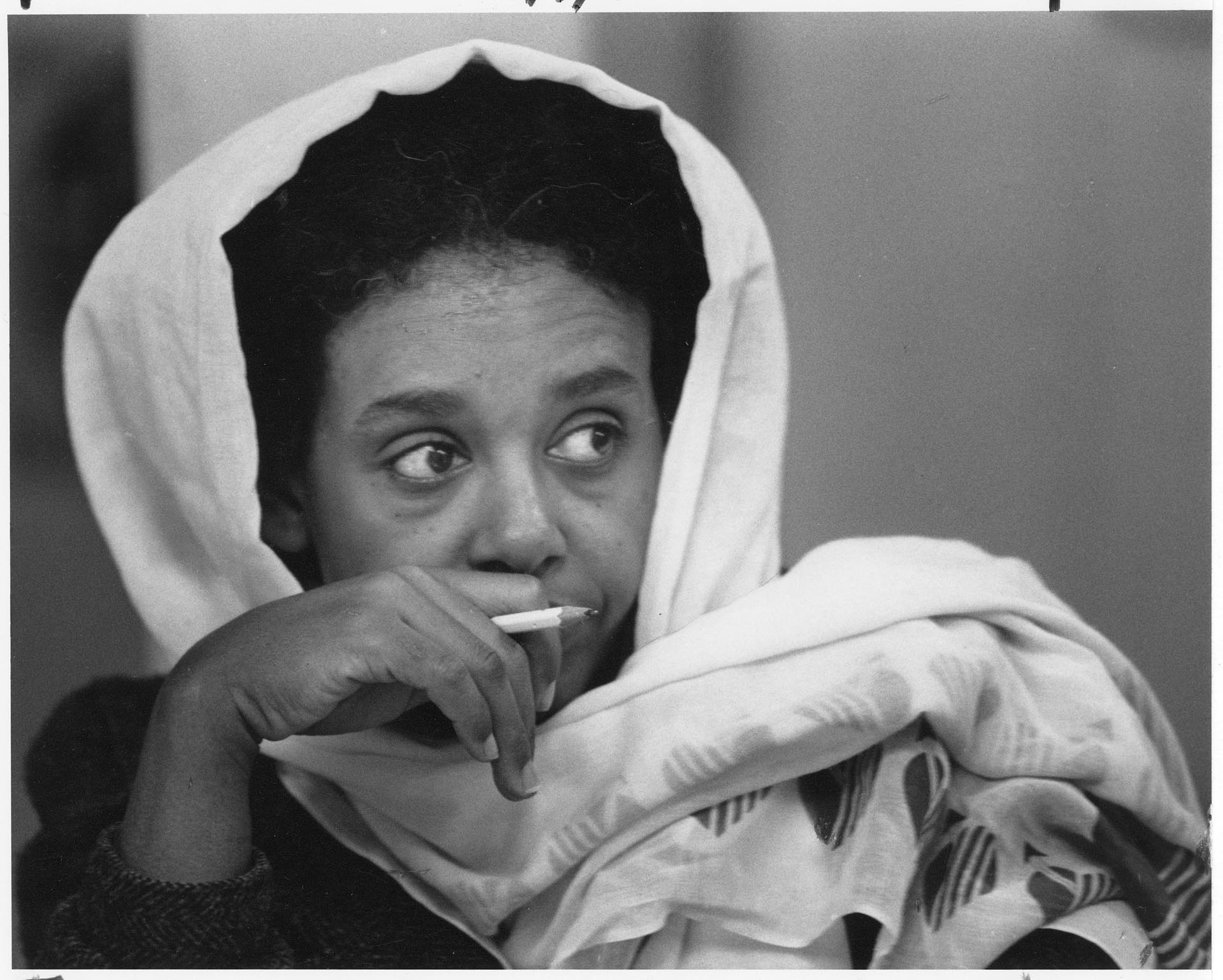
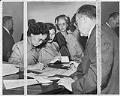
This image shows Zaid Tesfaion, a refugee from Ethiopia, attending a class at the Refugee Women’s Alliance.
Caption information source: “Agencies cope with a shifting refugee picture,” by Evelyn Iritani, Seattle Post-Intelligencer, February 16, 1991, page C1.