Seattle's African American population increased dramatically between 1940 and 1960, making the community the city's largest minority group. Like other minorities, African Americans experienced discrimination in many ways, including in housing. The enforcement of restrictive covenants in specific developments or subdivisions, realtors agreeing not to show houses to people of color, and red-lining, where banks denied credit to minorities, largely confined Black residents to the Central Area in Seattle.
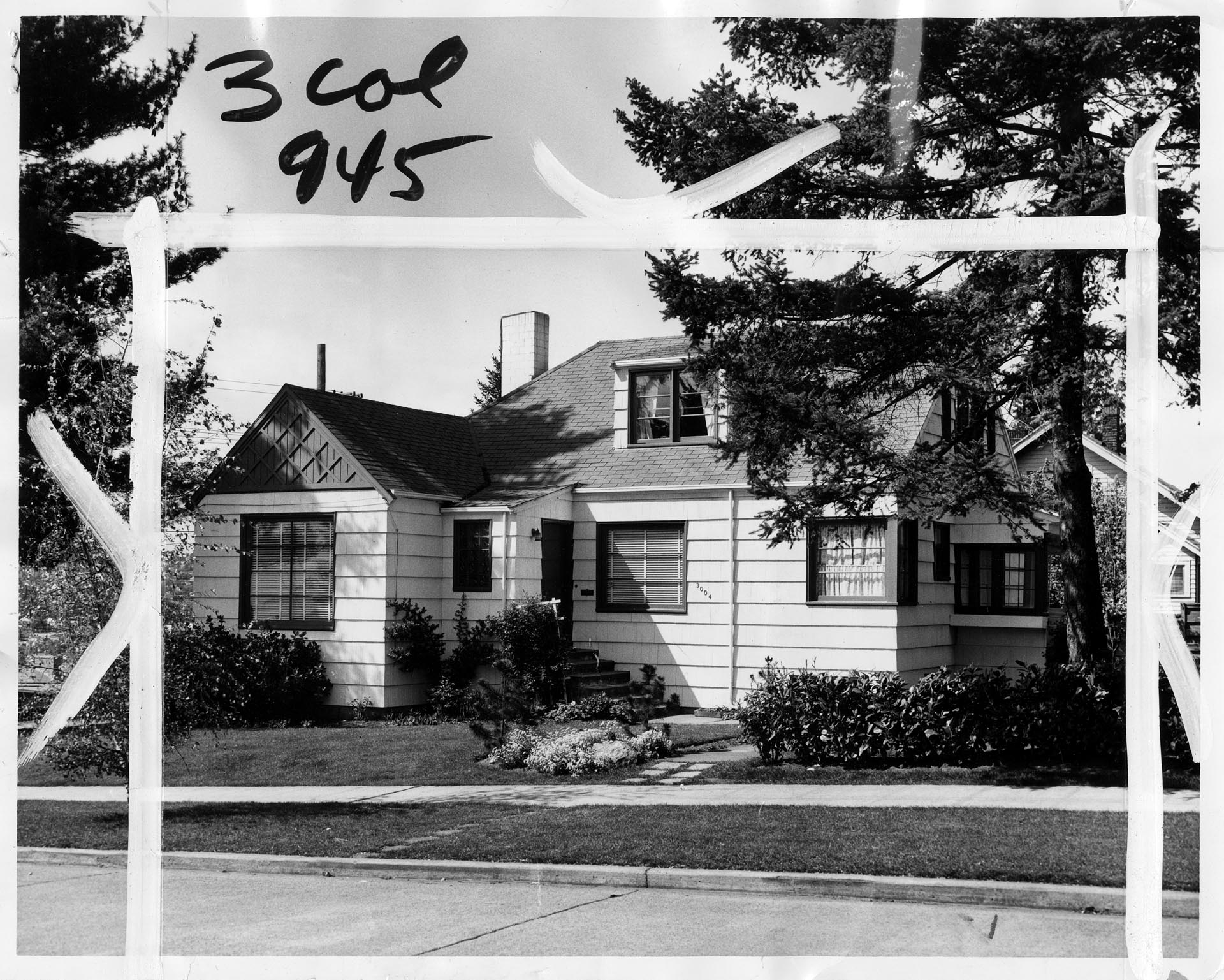
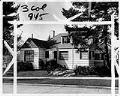
The house picture here, at 3004 East 70th Street in Seattle's Ravenna neighborhood, set off a decade-long battle for fair and housing practices in the city, collectively referred to as the Seattle Open Housing Campaign. In 1959 Robert L. Jones, a U.S. Postal Service mail carrier, and his wife filed the first discrimination in housing compliant with the State Board Against Discrimination (WSBAD) after they attempted to buy this house from John J. O'Meara, a Coast Guard Commander, and his wife. The Jones' felt their offer was rejected because of the color of their skin, and WSBAD ruled in their favor, a decision overturned in 1961 by the Supreme Court of Washington.
The national civil rights movement, along with events such as the Jones/O’Meara case, inspired fair housing activists in Seattle. In late 1961, the Seattle branch of the NAACP proposed that the city pass an ordinance prohibiting discrimination in housing. Protests, sit-ins, and marches were held all over the city, but in 1964 the Open Housing Ordinance was defeated in the Seattle municipal elections, partially due to the Red Scare ideology sweeping the country proclaiming that to call for civil rights was un-American and even potentially reflected communist political tendencies. Despite the setback, public support continued grow for establishing fair and open housing in Seattle, aided by voluntary efforts such as the Fair Housing Listing Service and which brought together Black people wanting to move out of the Central District and white homeowners willing to sell to minorities. Operation Equality was a three-year program run by the Seattle Urban League to assist minorities in finding housing. The Seattle Real Estate Board issued a Statement of Principle in June 1965, stating that it was the policy of the Board that members should show all listings without discrimination. That same month Seattle Mayor Braman issued an Executive Order relating to fair practices, reaffirming the City's policy to protect the rights of all citizens and affording all persons equal treatment. Finally in April 1968, an open housing law passed in Seattle.
Caption information source: "The Seattle Open Housing Campaign, 1959-1968," by Anne Frantilla, Seattle Municipal Archives, retrieved from https://www.seattle.gov/cityarchives/exhibits-and-education/digital-document-libraries/the-seattle-open-housing-campaign Caption information source: "The 1964 Open Housing Election: How the Press Influenced the Campaign," by Trevor Goodloe, retrieved from https://depts.washington.edu/civilr/CORE_housing_media.htm Caption information source: "Seattle votes down open housing on March 10, 1964," by David Wilma, HistoryLink.org Essay 3154. Caption information source: "Washington State Board Against Discrimination, by Allison O'Connor, November 6, 2007, retrieved from https://www.blackpast.org/african-american-history/washington-state-board-against-discrimination Caption information also derived from captions written by Post-Intelligencer staff and attached to the back of the photograph.