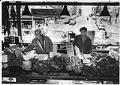
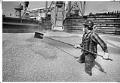
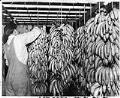
The Braceros program during World War II brought Mexican workers to the Yakima Valley to ease labor shortages, and even after the program ended in 1948, Mexicans and Mexican Americans continued to provide a substantial part of the Valley’s agricultural workforce. By the 1980s, the Yakima Valley was home to large communities of Mexican immigrant workers, as well as their US-born children. These communities were resented by some white residents of the Valley, but most considered ‘El Valle’ to be home nonetheless. Farm workers, including children, began working around 3 AM picking crops for about 14 cents per pound. A family would have to work 10-12 hours a day to make around $30 (about $72 in 2022). Many of the US-born generation received educational and professional opportunities and left the valley permanently, but others returned and advocated for the rights of farm workers in the Valley, through legal services or by organizing with the United Farm Workers.
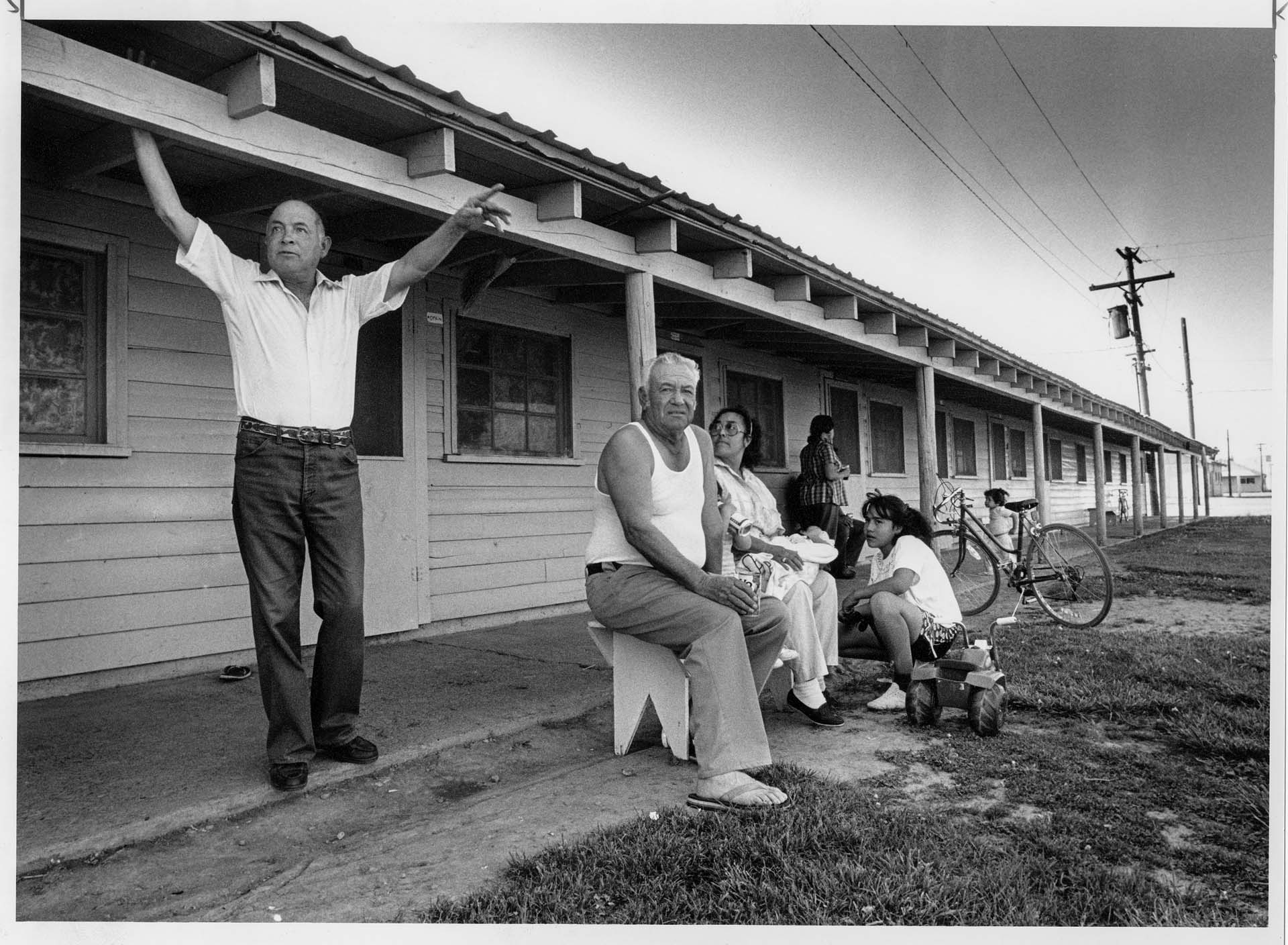
This image shows Joe Garza (left), Seferino and Virginia Zavala, and some of the Zavala's grandchildren outside the worker housing at Golding Farms, near Toppenish. Garza had worked at Golding for 19 years and managed the worker camp there. The Garzas has eight children, all of whom had worked in the fields, but later left to pursue other work.
Caption information source: “’El Valle’: Latinos along the Yakima begin to flex their muscles,” by Larry Werner, Seattle Post-Intelligencer, May 5, 1989, page B2.