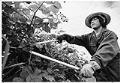
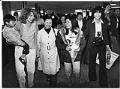
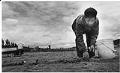
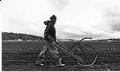
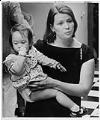
Mien and Hmong women from Laos learn needlework at an early age, and use their skills to make the traditional embroidered clothing and accessories worn by their people. The women continued to embroider while in refugee camps after fleeing Laos in the aftermath of the Vietnam War and Laotian Civil War, and after emigrating to the US.
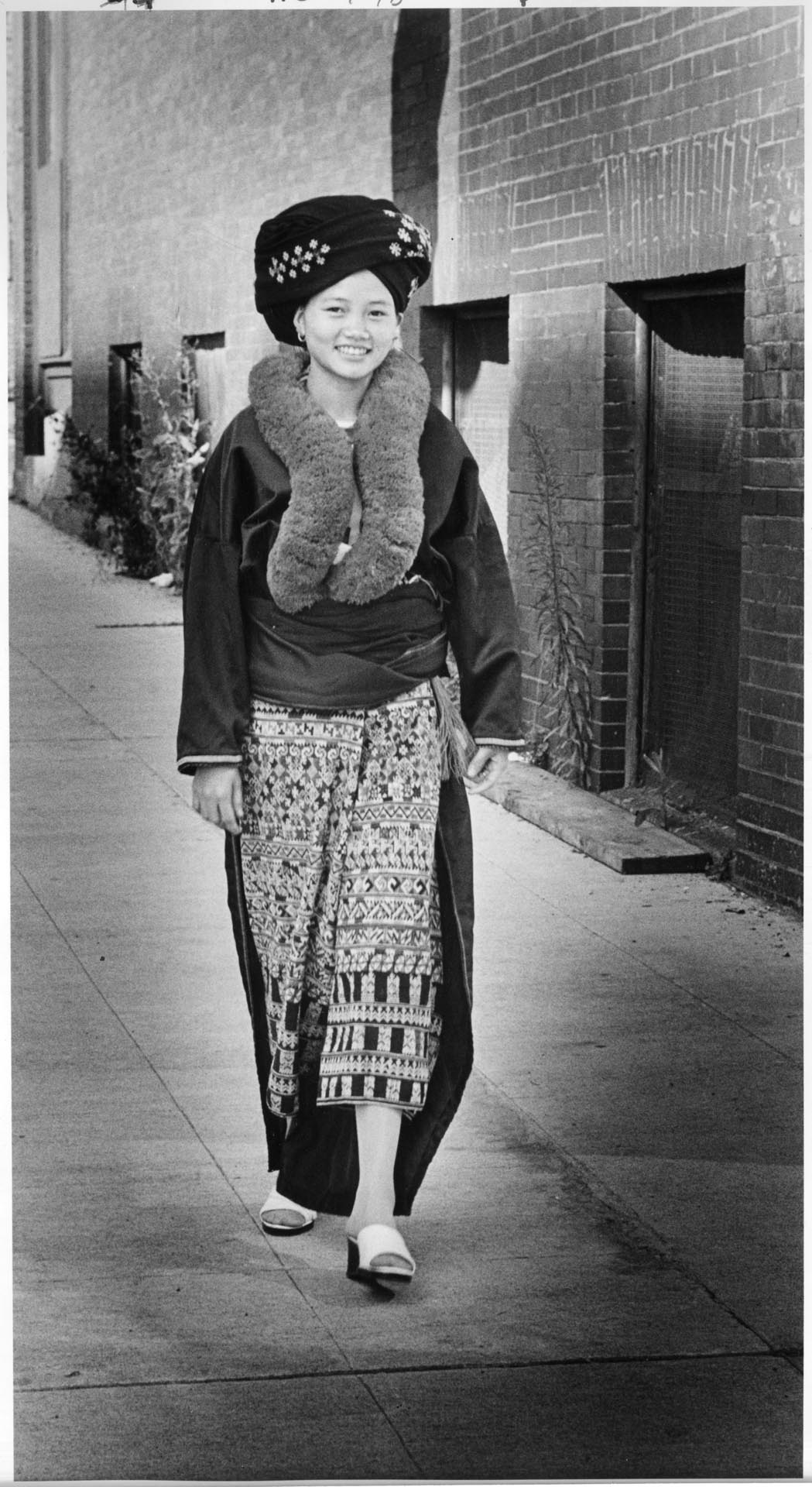
Mien and Hmong women in Seattle formed a cooperative, "Southeast Asian Design," and the group showed their needlework at regional fairs and at the Wing Luke Museum. In August 1981, the Cicada Gallery in Seattle's Chinatown - International District held an exhibit of "functional art," such as baby carriers, bags and coverlets, made by Seattle-area Hmong and Mien women from Laos. Here, Mey Seng Saechao, one the artists in the exhibit, wears the traditional embroidered clothing of the Mien people. The pants she is wearing took her a year to make.
Caption information source: "Laotian women bring art to center" by Susan Phinney, Seatttle Post-Intelligencer, August 6, 1981, p. D1.
ID Number: 2000.107.110.15.03
Date: 1981
Physical Description: 1 photographic print : b&w ; 8 x 10 in.