Back to Results
Videorecording
Oral history interview with Guendolen Plestcheeff, May 22, 1985
Contact MOHAI to OrderGuendolen Carkeek Plestcheeff (1892 – 1994) was a Seattle preservationist and arts advocate. Plestcheef was the daughter of Morgan and Emily Carkeek, who arrived in Seattle in 1885. The family donated the land for Carkeek park, and Emily Carkeek founded the Seattle Historical Society in 1911. Guendolen started school in Seattle before being sent abroad to a French school in England, then to convents and finishing schools in Switzerland. Upon her return to Seattle, she met Paulo Brenna, the Italian consul in Seattle, who she married in London in 1921. The pair lived in Paris for a while, then in Tallinn, Estonia. By the late 1920s Guendolen Brenna had become one of the most fashionable women in the world and, in 1928, author Bertrand Collins penned a novel, Rome Express, loosely based on her life. Her marriage with Brennan ended in 1928 and she wed Theodore Plestcheeff, an exiled Russian aristocrat, the following year. He shared her interest in arts and antiques, and the couple set-up residence in Seattle at the Sam Hill House in Seattle’s Capitol Hill neighborhood in 1937.
During her life, Plestcheeff was immersed in the preservation of Seattle historic spaces and artifacts. For years, she kept afloat the historical society founded by her mother, serving as its president from 1938 to 1965, and helped to raise the funds to establish the Museum of History & Industry, which opened in 1952. In 1987, she formed the Plestcheeff Institute for Decorative Arts and bequeathed her Capitol Hill mansion and all its contents to the University of Washington's school of architecture as a study center.
Interview conducted by John Robinson at her home on May 22, 1985. This interview is part of the Donald Schmechel Oral History Collection. Don Schmechel, who was a member of the Seattle Public Library Foundation board, began this project with Seattle Public Library in 1984, with the Museum of History & Industry (MOHAI) brought on board as a partner in early 1985. Schmechel himself worked to raise the funding for the project, and volunteered his time to manage the project, and to conduct interviews along with a crew of volunteers. Originally titled the Videotaping Historic Figures (VHF) Program, the project interviewed 91 people, and MOHAI holds the interviews for 32 of these individuals.
During her life, Plestcheeff was immersed in the preservation of Seattle historic spaces and artifacts. For years, she kept afloat the historical society founded by her mother, serving as its president from 1938 to 1965, and helped to raise the funds to establish the Museum of History & Industry, which opened in 1952. In 1987, she formed the Plestcheeff Institute for Decorative Arts and bequeathed her Capitol Hill mansion and all its contents to the University of Washington's school of architecture as a study center.
Interview conducted by John Robinson at her home on May 22, 1985. This interview is part of the Donald Schmechel Oral History Collection. Don Schmechel, who was a member of the Seattle Public Library Foundation board, began this project with Seattle Public Library in 1984, with the Museum of History & Industry (MOHAI) brought on board as a partner in early 1985. Schmechel himself worked to raise the funding for the project, and volunteered his time to manage the project, and to conduct interviews along with a crew of volunteers. Originally titled the Videotaping Historic Figures (VHF) Program, the project interviewed 91 people, and MOHAI holds the interviews for 32 of these individuals.
ID Number: 1985.135.21
Date: 1985
Creator(s):
Plestcheeff, Guendolen Carkeek, 1892-1994, Interviewee
Physical Description: 2 video cassettes : VHS
Additional Information: Digital copy of this item available thanks to funding from a 2017 National Endowment for the Humanities grant.
View the finding aid for this collection at https://archiveswest.orbiscascade.org/ark:80444/xv11499
Interview online at Internet Archive at https://archive.org/details/mohai?tab=collection&query=1985.135.21
View the finding aid for this collection at https://archiveswest.orbiscascade.org/ark:80444/xv11499
Interview online at Internet Archive at https://archive.org/details/mohai?tab=collection&query=1985.135.21
Credit: MOHAI, Donald Schmechel Oral History Collection, 1985.135.21
Copyright: All Rights Reserved
Subjects:
Clubs and Organizations
Other matching results
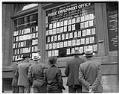
Public employment office exterior showing men looking at listings, Seattle, 1936
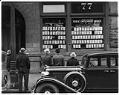
Men looking at listings posted in the window of the Public Employment Office, Seattle, 1936
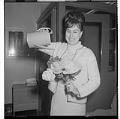
Mrs. Lee Ross at fundraiser for the National Council of Jewish Women, Seattle section, April 1965
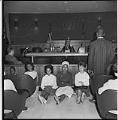
Four women at City Council sit-in, Seattle, July 1963
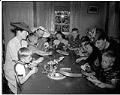
Women and children sitting at table at Seattle Children's Home, December 24, 1942
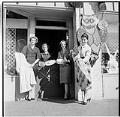
Women standing in front of Wise Penny Thrift Shop, Seattle, 1965
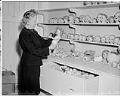
Goodwill Auxiliary member sorting dolls, Seattle, November 2, 1958
Seattle Opportunities Industrialization Center (SOIC) open house, 1967