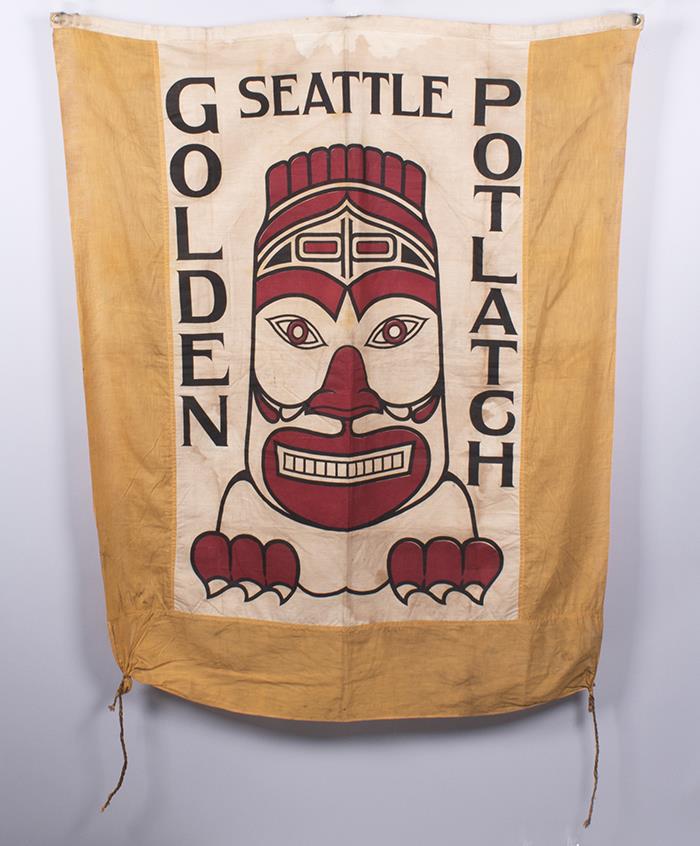
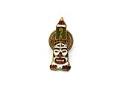
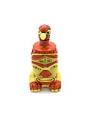
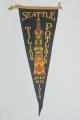
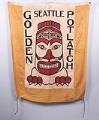
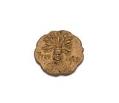
Seattle's first Golden Potlatch was celebrated in 1911. Its organizers, a group of prominent businessmen, wanted to promote the city in hopes of continuing the boomtimes of the Gold Rush, and the attention drawn by the 1909 Alaska-Yukon-Pacific Exposition. They expected the festival to rival New Orleans' Mardi Gras and Portland's Rose Festival. For a week, residents and visitors enjoyed parades, dances, band concerts, children's play festivals, fireworks, and many other activities. Like the later Seafair, Potlatch events included air shows and visiting naval vessels. The Potlatch continued into the 1940s. The Bug motif was the festival’s ubiquitous emblem, meant to symbolize a figure on a totem pole.
The name "Golden Potlatch" appropriates a Chinook Jargon word describing a Native ceremony celebration and gift giving. It also reflects the importance of the Klondike Gold Rush to Seattle's growth. Many organizers and participants in the Golden Potlatch dressed in stereotyped imitations of traditional Native attire, as part of a created Potlatch myth. The appropriation of Indigenous culture in order to market products or events was one common example of discrimination and marginalization faced by Native peoples in the United States.