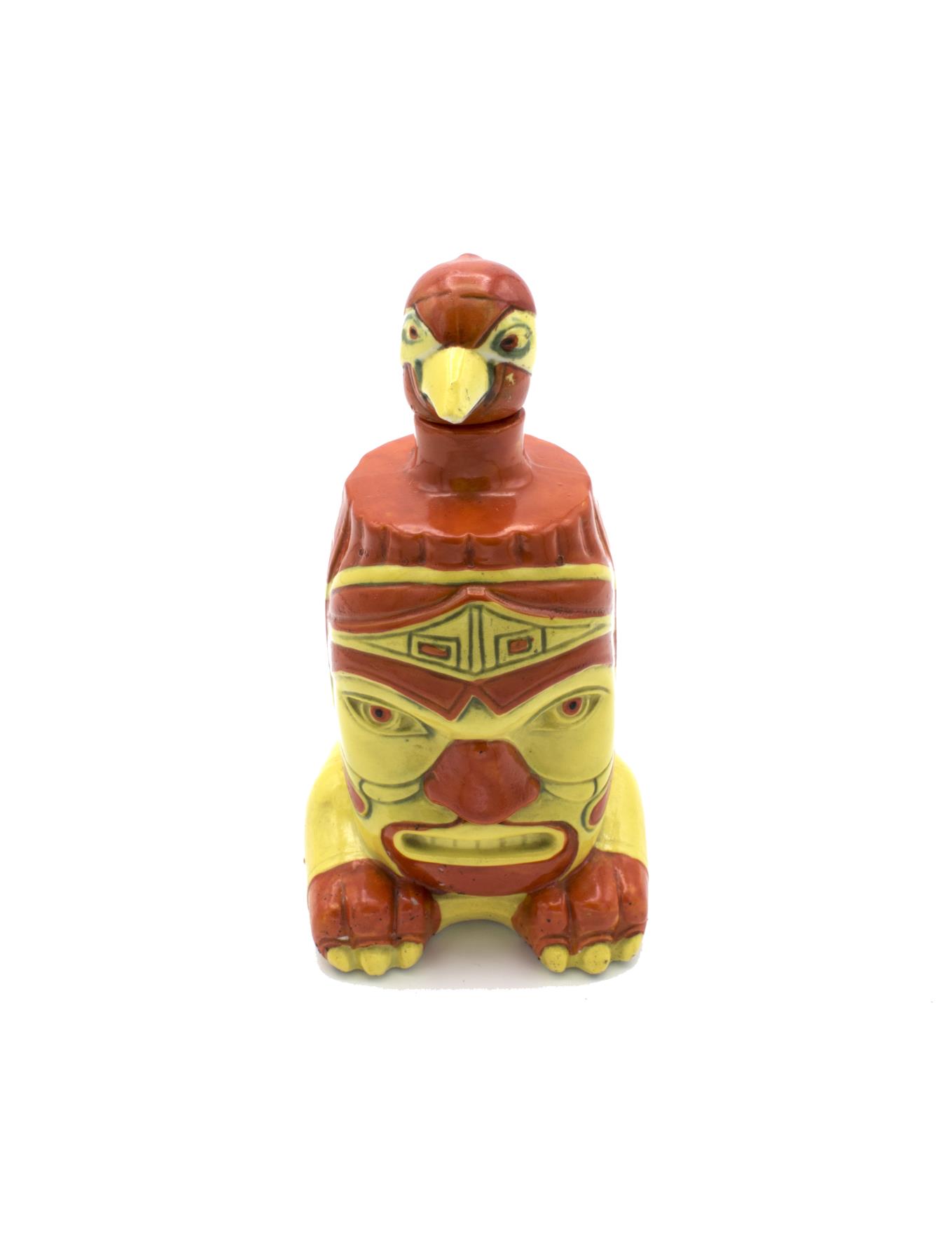
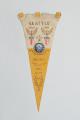
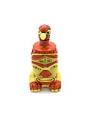
This Potlatch “Bug” is a souvenir of the Golden Potlatch, a city-wide festival first held in July of 1911. It was organized by civic boosters who were hoping to capitalize on the success of the Alaska-Yukon-Pacific Exposition of 1909. The organizers called themselves the Tilikums of Elttaes (Tilikum is "Friends" in Chinook Jargon; Elttaes is Seattle spelled backward). They were a fraternal, civic organization composed primarily of influential white Seattle area businessmen who appropriated Native American imagery to promote tourism and the economic development of the city. The appropriation of culture in order to market products or events is a common example of discrimination and marginalization faced by Indigenous peoples in the United States. This “bug” is done in a style that imitates Northwest Coast Native totem pole carvings.
The name "Golden Potlatch" appropriates a Chinook Jargon word describing a Native ceremony celebration and gift giving. It also reflects the importance of the Klondike Gold Rush to Seattle's growth. Many organizers and participants in the Golden Potlatch dressed in stereotyped imitations of traditional Native attire, as part of a created Potlatch myth. The appropriation of Indigenous culture in order to market products or events was one common example of discrimination and marginalization faced by Native peoples in the United States.
ID Number: 1972.5567.46
Date: 1911
Physical Description: 1 Figurine; porcelain, paint; 5 in.H x 2.5 in.W x 2.5 in.D