As part of MOHAI’s ongoing commitment to reimagine how we share the stories that make up our community, we’ve been working closely with Community Advisory Committees (CACs) and key stakeholders to identify stories that deserve greater visibility. These conversations have led us to identify artifacts in our collection that speak to innovation, resilience, exclusion, and cultural continuity.

We’re proud to share a handful of these artifacts and their stories below. Each one reflects the kind of community-centered storytelling that is guiding this project forward.
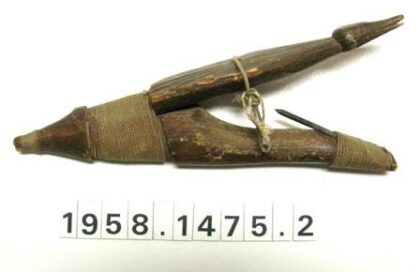
Halibut hook from western Washington, ca. 1900

Halibut hook from western Washington, ca. 1900

MOHAI, 1958.1475.2

A testament to Indigenous maritime innovation, this fishhook is designed to only catch medium-sized halibut, not the smaller juveniles or larger spawning fish, in order to preserve the fish population. It represents both ingenious fishing technology and spiritual significance. Its enduring use and recent resurgence highlight the deep connections between tradition and contemporary research.

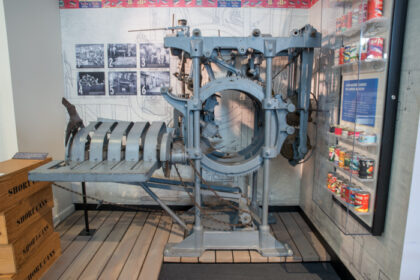
Automated salmon cleaner, "Iron Chink," made by Smith Cannery Machine Company in Seattle, 1909

Automated salmon cleaner, "Iron Chink," made by Smith Cannery Machine Company in Seattle, 1909

MOHAI, 1970.4992

This machine, invented in Seattle in 1909, tells a complex story of industrial innovation and racial exclusion. Community Advisory Committee members pointed out that innovation happens in many arenas, not just technological design—and that it is embedded in the power structures that shape our economic and social systems.

This “labor-saving” machine was in part a response to innovative organizing strategies used by workers in the canneries to fight for better pay and working conditions. When cannery owners used mechanical innovations like the “Iron Chink” to replace skilled workers, union organizers had to find new tactics to build labor power.

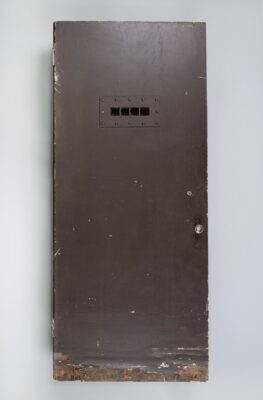
Door from John "Doc" Hamilton's speakeasy in Seattle, ca. 1920s

Door from John "Doc" Hamilton's speakeasy in Seattle, ca. 1920s

MOHAI, 2024.27.1

This door once guarded a Black-owned speakeasy in the 1920s, a hub of community and resistance. Doc Hamilton’s story reveals the complexities of race, power, and survival during Prohibition-era Seattle.

These artifacts represent the kind of rich, nuanced history MOHAI is committed to sharing—stories that have long been underrepresented, now brought to light through the voices of our community partners.

Stay tuned as we continue to publish these stories on our website and share how community collaboration is shaping the future of history at MOHAI.

About this project
4Culture Logo

Generous support for MOHAI’s Community Advisory Committees is provided by 4Culture.

Categories:
Innovation

Related Blog Posts