MOHAI’s Curator’s Fellowship invites community and academic historians to bring a new perspective to MOHAI’s extensive collections. 2024 Curator’s Fellow, Polly Yorioka, researched a collection of Japanese Girls’ Day and Boys’ Day dolls left behind after families were sent to incarceration camps. Left in the care of Bailey Gatzert Elementary, these dolls were never retrieved.
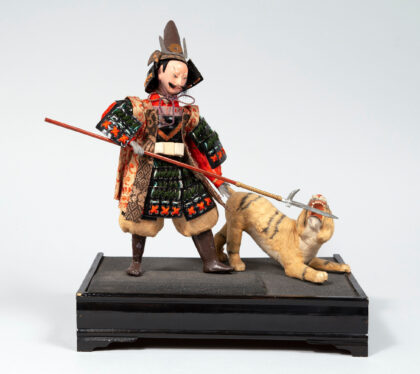
Photograph of a Japanese samurai doll with a tiger.

MOHAI, 1973.5711.15

Both Girls’ Day (Hinamatsuri) and Boys’ Day (Tango no Sekku) are traditional Japanese holidays that celebrate children with special foods, ceremonies and decorative dolls. Many of the students who attended Bailey Gatzert Elementary were of Japanese descent, and the school lost approximately 45 percent of its student body when the federal government forcibly removed Japanese Americans to incarceration camps in 1942.

Because they were able to take so few belongings with them, many of the students gave their Girls’ Day and Boys’ Day dolls to their principal, Miss Ada Mahon, for safekeeping. These dolls remained at Bailey Gatzert Elementary from 1942 until 1973, when they were given to MOHAI. In 2024, MOHAI Curator’s Fellow Polly Yorioka researched the history and significance of these dolls.

Learn more about Polly’s research below, and explore more artifacts related to Japanese American Incarceration in the MOHAI Collection.
Q&A with 2024 Curator's Fellow, Polly Yorioka

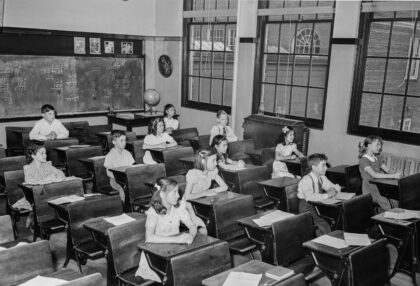
Black and white photograph of a students in a classroom with a handful of empty desks.

MOHAI, Seattle Post-Intelligencer Collection, PI25525

In July 2024, Polly sat down for an interview about her research with MOHAI staff. Read the transcript of this interview below.

What made you interested in researching this topic?

I was immediately interested in this topic because it connects to my own family history. My grandparents went to Bailey Gatzert Elementary School. My grandmother would always tell me about the Girls’ Day dolls that she had growing up, which she had to leave behind when the war broke out. She said that was one of her biggest losses in her life—out of all the things they left behind, she would always think about her dolls. So, when I saw that there were sets of dolls in the MOHAI collection and that they were from Bailey Gatzert Elementary School, I was really excited to learn more.

What is the most surprising thing you learned while working on this project?

I was surprised by how much information there already is about students at Bailey Gatzert Elementary School. There are a lot of stories that have been preserved, which is really nice to see—especially because so many people in these situations didn’t really want to talk about those things.

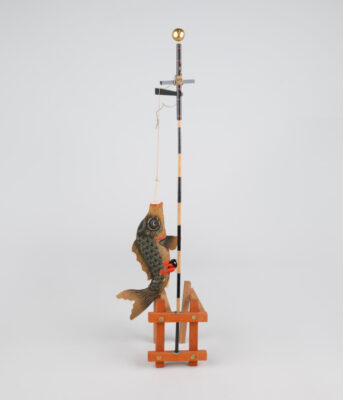
Photograph of a Japanese carp fish doll hanging from a pole.

MOHAI, 1973.5711.11

What makes MOHAI the right place for you to do this research?

I think one of the really great things that MOHAI does is tie together the history of the city and different communities together with technology and industry. That long history of being willing to tell stories that people aren’t always talking about, especially in the Japanese community, makes this the perfect place to do this research. It’s really exciting to get to be part of MOHAI’s legacy.

What do you hope people take away from your presentation?

One of the big reasons this story is important is that it connects to a lot of things in present day. I’ve been reflecting a lot on the danger of misinformation. Thinking about how, at the time, everyone was so afraid of the Japanese and supported sending that community away. Even the children, who clearly couldn’t be enemies of the state.

So, I think that as we do this kind of work, it encourages people to think, “what are the stories I’m hearing now that might not be true?” And hopefully people realize that we can do things differently when given the chance.

Forgotten Dolls, Remembered Stories

Polly presented her research in October 2024 in her Curator’s Fellow Lecture, titled Forgotten Dolls, Remembered Stories. This presentation details the experiences of Japanese children who struggled with their American identity while unjustly incarcerated, as seen through the dolls they left behind.

Categories:
Civics

Related Blog Posts

Photograph of MOHAI Oral History Specialist Isabel Bartosh
December 10, 2025

MOHAI Refreshes Its Oral History Transcriptions with Support from 4Culture

Temporary Oral History Specialist Isabel Bartosh working on a transcript, 2024 Over the last 18 months, MOHAI’s Library team has…
Read More
Photograph of curator's fellow Than Tan researching photos in the MOHAI collection.
October 15, 2025

Highlighting Untold Histories of the Pacific Northwest with MOHAI Curator’s Fellows

This year marks MOHAI’s fourth annual Curator’s Fellowship program. Each January, we put out a call for applicants to submit…
Read More