
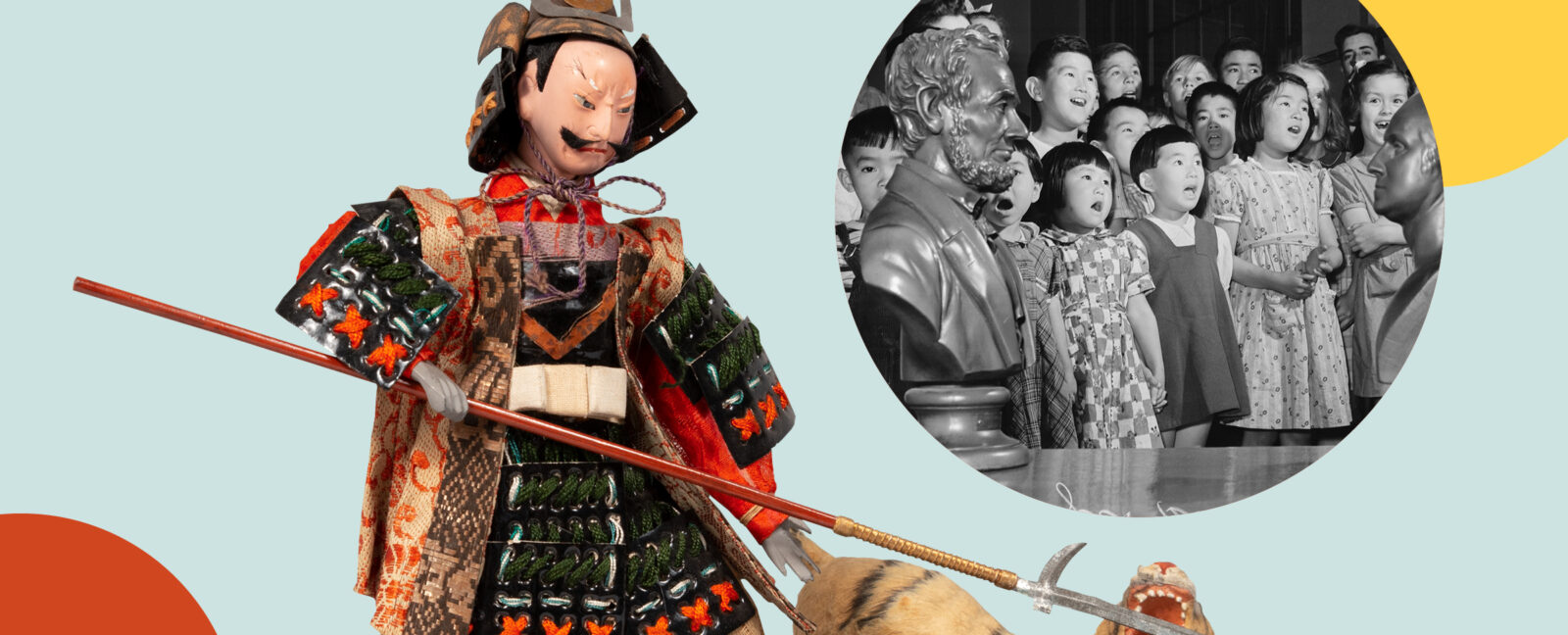
The Curator’s Fellowship invites community and academic historians to bring a new perspective to MOHAI’s extensive collections. 2024 Curator’s Fellow, Polly Yorioka, researched a collection of Japanese Boys’ and Girls’ dolls left behind after families were sent to incarceration camps. Left in the care of Bailey Gatzert Elementary, these dolls were never retrieved. Join Polly for a discussion on how these forgotten dolls help us remember the stories of identity and loss experienced by Japanese American children during WWII.
ASL Interpretation and CART captioning are available during the program. In addition, a limited number of Assistive Listening Devices are available upon request. For more accessibility support, email programs@mohai.org two weeks before the program.
Event Summary
At this event, Polly Yorioka, the 2024 Curator’s Fellow, presented “Forgotten Dolls, Remembered Stories,” delving into the history of Japanese Boys’ Day and Girls’ Day dolls left behind by families incarcerated during World War II. This project aimed to honor the narratives of those affected by the Japanese American incarceration, particularly through the lens of personal and communal loss tied to these cherished artifacts.
Yorioka, a fourth-generation Japanese American, shared her own familial connections to this history, detailing the poignant memories of her grandmother, who lamented the loss of her dolls amid the chaos of incarceration. As Yorioka reflected, “My grandmother’s greatest loss…was the loss of her Girls’ Day dolls,” emphasizing the emotional weight attached to such objects, which symbolize a broader cultural trauma.
The presentation underscored significant themes such as cultural identity and the impact of war on personal histories. Yorioka highlighted how the Japanese American community in Seattle, once thriving, faced disruption and trauma due to Executive Order 9066, leading to a respectful discussion about the legacy of Principal Ada Mahon of Bailey Gatzert Elementary. Students shared mixed memories of their experiences that ranged from patriotism instilled by Mahon to a struggle with their Japanese American identity.
In reflecting on the relevance of these stories, Yorioka reiterated the importance of remembering and sharing personal histories, especially in a world still grappling with issues of discrimination and identity. As echoed in Laura Kusaka’s insight, “We must keep our minds and our hearts open to hear these stories,” a reminder of the ongoing need for understanding and empathy in our diverse societal landscape. The program encouraged attendees to connect with their own familial narratives, fostering a deeper awareness of collective histories in today’s context.